

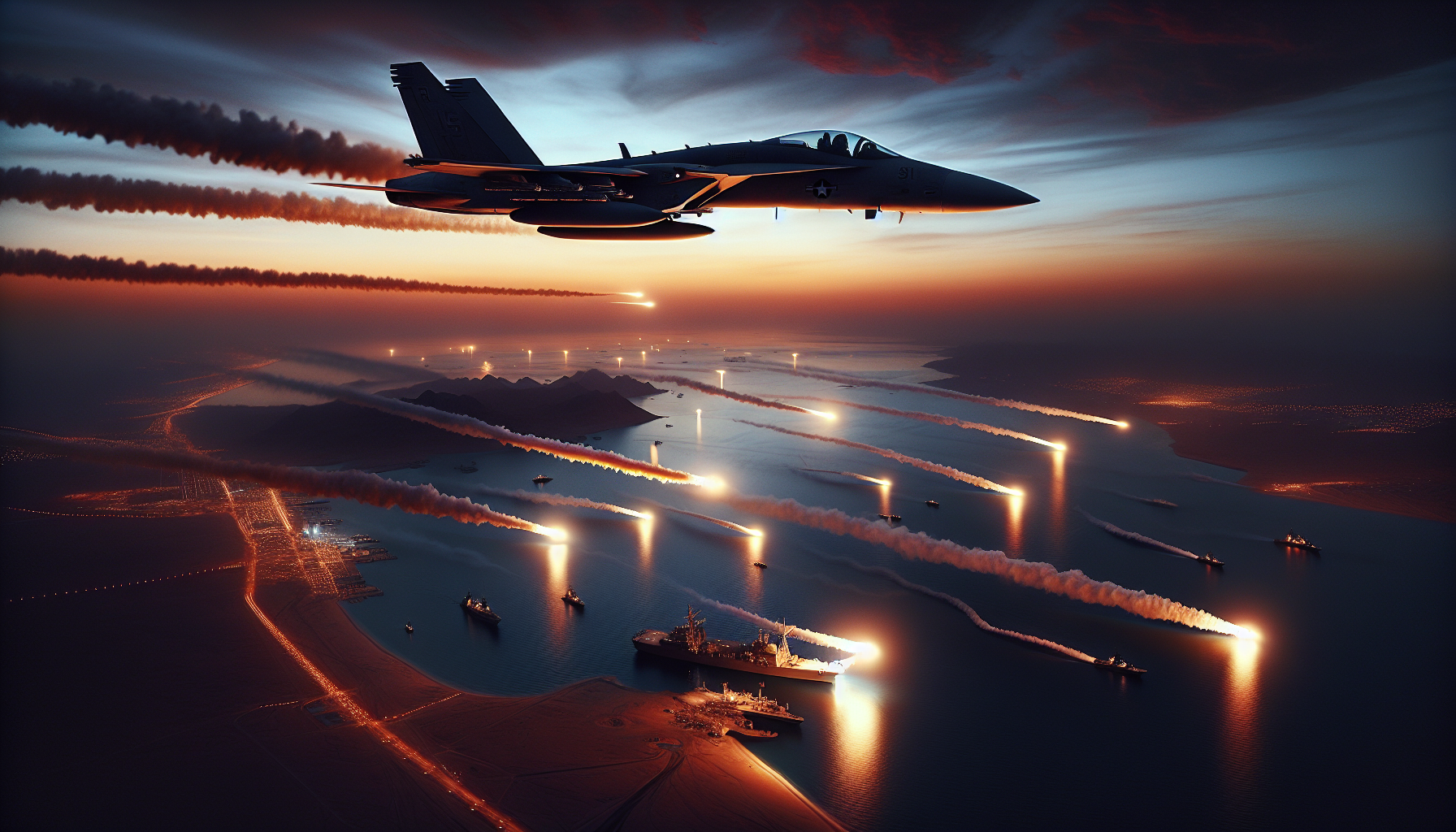
The 2026 Iran conflict has reached its 36th day with marked intensification. Iran claims to have shot down two US fighter jets, with one crew member rescued and the other still missing. Tehran has offered a reward for information and insists on capturing the missing airman alive. This represents a rare direct strike on US aircraft during the hostilities.
Simultaneously, Iran launched multiple missile salvos, including cluster munitions, targeting residential neighborhoods in central Israel such as Ramat Gan, Givata’im, Bnei Brak, and Petah Tikva. These attacks caused damage and light injuries, including a 52-year-old man hospitalized. Fires and debris were reported in the Negev and Rosh Haayin areas. Although Israel’s air defenses intercepted most missiles, some factories and homes sustained damage.
In a significant development, US President Trump issued a 48-hour ultimatum demanding Iran reopen the Strait of Hormuz or face escalated military action. He warned that failure to comply could lead to Iran being taken “back to the Stone Ages,” while expressing optimism that the conflict might conclude soon. This statement comes amid US gasoline prices remaining above $4 per gallon, driven by disrupted oil flows through the strategic waterway.
Military operations have intensified on both sides. US and Israeli forces continue airstrikes targeting Iranian infrastructure, including sites in the Isfahan region, weapons production facilities, and areas near the Bushehr nuclear plant. Israel also struck bridges in southern Lebanon and targeted Hezbollah positions. Over 70 Islamic Revolutionary Guard Corps (IRGC) targets have been hit in recent days.
Iran has retaliated with multiple missile barrages, some involving over ten missiles, coordinated with allied groups such as Hezbollah and the Houthis. Attacks have been reported on US bases and Gulf infrastructure, with Iran claiming hits on Israeli-linked shipping in the Strait of Hormuz. The conflict has expanded to multiple fronts, including escalations in Lebanon and ongoing proxy involvement. The US has deployed additional military assets, with troop numbers in the region exceeding 50,000.
The economic impact remains severe. US average gasoline prices have surged above $4 per gallon, the highest since 2022, due to near shutdowns of the Strait of Hormuz and reduced oil production in the Middle East. Global oil markets continue to experience volatility, affecting inflation and supply chains worldwide. President Trump urged allied nations facing shortages to secure their own oil supplies or purchase from the US.
The humanitarian toll continues to rise, with thousands killed and wounded across Iran, Israel, and neighboring areas since the conflict began on February 28. Recent strikes have damaged civilian infrastructure, including homes and factories. UN officials emphasize the disproportionate impact on civilians, citing over 113,000 affected sites in Iran the Iranian Red Crescent. Displacement and shelter crises persist, worsening the regional humanitarian situation.
Diplomatically, President Trump claims that a “regime change” has effectively occurred following the deaths of Supreme Leader Ali Khamenei and other officials, with Mojtaba Khamenei now leading. He describes the new Iranian leadership as potentially more reasonable. While no confirmed direct negotiations have taken place, messages have been exchanged. Iran denies engaging in active ceasefire talks and insists on conditions such as halting all attacks. The primary focus remains on reopening the Strait of Hormuz for international shipping. Additional US naval forces, including carrier groups, have been deployed to the area.
The coming 48 hours are critical following Trump’s ultimatum. Any progress on reopening the Strait of Hormuz, further missile exchanges, or developments in the search for the missing US airman will be closely watched. Markets remain highly sensitive to oil supply disruptions and escalation risks.
