



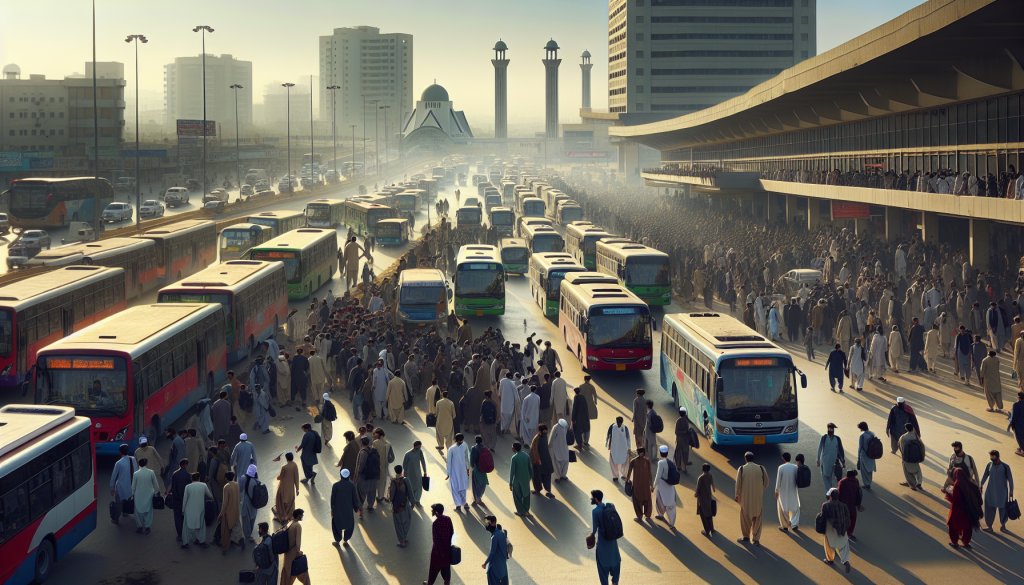
Interior Minister Mohsin Naqvi declared on Friday that all public transportation in Islamabad will be free of charge for the next 30 days, following orders from Prime Minister Shahbaz Sharif. The announcement was made on the social media platform X, confirming that the initiative will commence the following day and will be available to all residents of Islamabad.
This relief measure aims to alleviate the financial strain caused by increasing transport costs for daily commuters. The Ministry of Interior will cover the expenses amounting to Rs 350 million to support this public welfare effort. The government anticipates that thousands of passengers, including students, workers, and low-income families who depend heavily on public transit, will benefit from this scheme.
Further information regarding operational changes and the specific routes included in the free transport program is expected to be released soon. This move aligns with the administration’s commitment to improving accessibility and reducing the economic burden on citizens.
In a related development, the Punjab government also announced free public transport for all passengers on Friday, responding to a sharp rise in petrol prices. The federal government recently increased petrol prices by Rs 138 per litre, setting the new rate at Rs 458.40 per litre. Diesel prices surged by Rs 184 per litre, reaching Rs 520.35 per litre.
Punjab Chief Minister Maryam Nawaz Sharif unveiled a comprehensive relief package that includes free access to public transport services such as the Orange Line, Metro Bus, Speedo buses, and Green Electric Buses across Punjab’s cities. The package also offers financial subsidies to farmers, providing Rs 100 per litre on diesel, and extends a similar Rs 100 per litre subsidy on up to 20 litres of petrol for registered motorcycle owners.
Maryam Nawaz emphasized that this relief initiative is part of Prime Minister Shahbaz Sharif’s national savings and austerity program in Punjab. She acknowledged the difficult economic conditions but stressed that supporting the public remains a top priority. She encouraged citizens to utilize public transport during these challenging times, highlighting the impact of the global economic crisis and ongoing conflicts on Pakistan’s economy, particularly due to its dependence on imported oil.
Meanwhile, Hafiz Naeem ur Rehman, Chief of Jamaat-e-Islami Pakistan, strongly criticized the steep increase in petroleum prices, describing it as a “petrol bomb” inflicted on the public by the government. He announced plans to launch a nationwide protest movement against the price hikes, calling on citizens, especially the youth, to mobilize and demand change.

Leave an opinion