

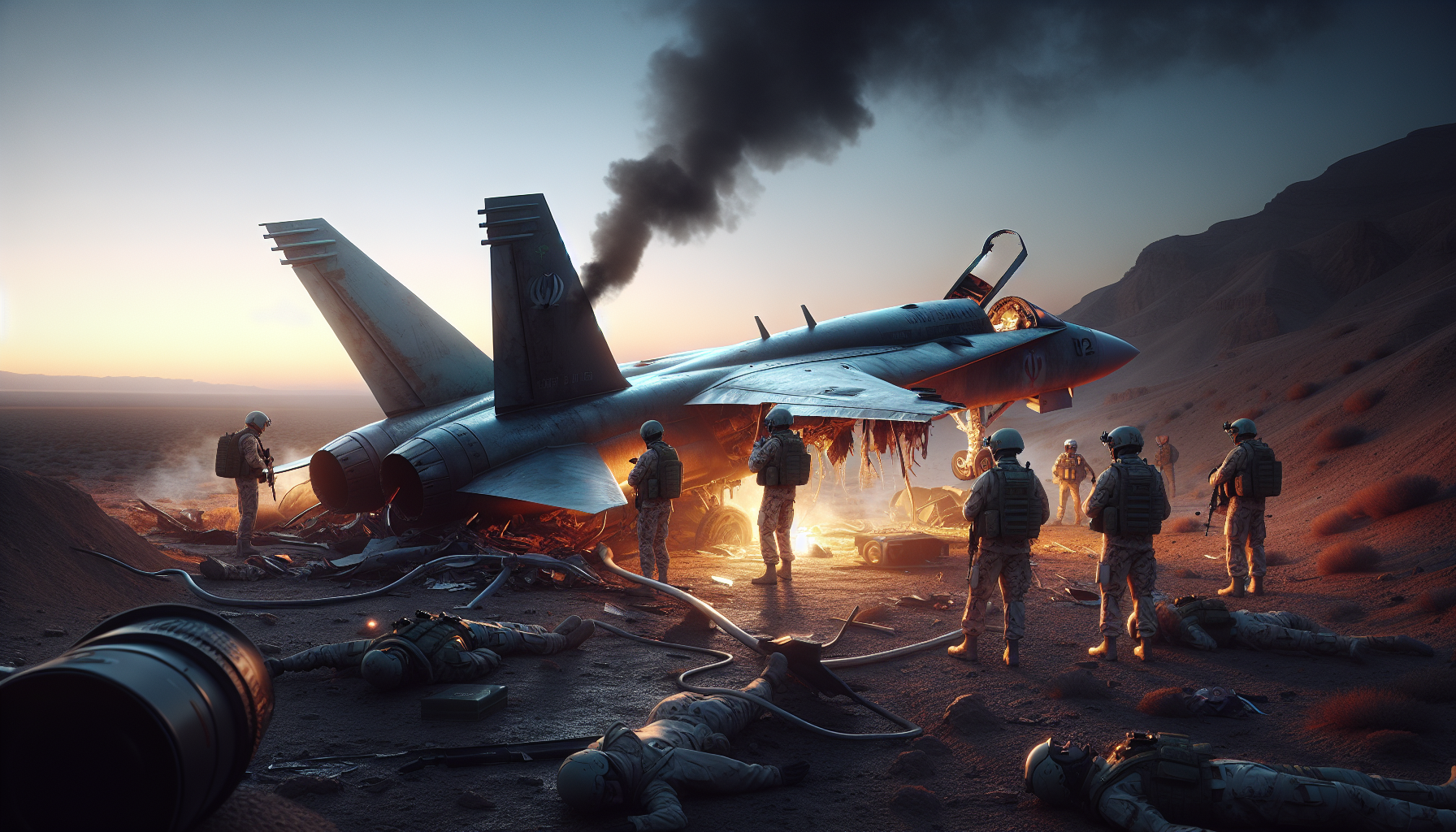
Iran has claimed it downed a second US F-35 fighter jet during recent heightened tensions, with the Islamic Revolutionary Guard Corps (IRGC) stating the aircraft was targeted within Iranian airspace. However, no details about the pilot have been disclosed, and some reports indicate a sudden explosion may have prevented the pilot from ejecting. The US Central Command has yet to respond officially, and independent verification of the claim remains unavailable.
In a significant development, the IRGC announced it conducted strikes on seven US and Israeli airbases as part of the 90th wave of “Operation True Promise 4.” These attacks targeted critical military and technological infrastructure in the region. The IRGC also claimed to have hit a cloud computing center operated by an international technology company in Bahrain, which reportedly led the firm to reduce or suspend its regional operations. Iranian officials emphasized that these strikes aim to degrade the adversaries’ military and technological capabilities and warned that additional targets, including vital companies, could face attacks if hostilities persist, attributing the escalation to US leadership.
Meanwhile, former Iranian Foreign Minister Javad Zarif called for Tehran to declare victory and end the conflict through a comprehensive agreement. Writing in Foreign Affairs, Zarif proposed that Iran accept certain restrictions on its nuclear program in exchange for the lifting of sanctions. He also suggested reopening the Strait of Hormuz, exploring a mutual non-aggression pact with the United States, and pursuing economic cooperation.
Contrasting Zarif’s approach, Iran’s Foreign Minister Abbas Araqchi asserted that Tehran would not surrender despite US and Israeli strikes on civilian infrastructure. Sharing an image of a destroyed bridge, Araqchi stated that Iran would rebuild stronger and criticized Washington’s damaged global credibility. He emphasized that attacks on civilian structures, including unfinished bridges, would not force Iran to capitulate but rather demonstrate the adversary’s defeat and moral decline. His comments followed US President Donald Trump’s statement that a targeted bridge would “never be usable again” and his warning to Iran to negotiate before it was too late.
In a related tragedy, Iran announced the death of former Foreign Minister Kamal Kharrazi from injuries sustained during a US and Israeli strike on his Tehran residence. Reports indicated that his wife was killed in the attack, and Kharrazi had been in a coma prior to his passing. Iranian officials described his death as a significant loss to the nation’s diplomatic and academic communities.
Expanding the scope of conflict, Yemen’s Houthi group claimed responsibility for a fourth missile attack on Israel, targeting key locations in Tel Aviv. Israel’s military confirmed intercepting missiles launched from Yemen and reported activating its air defense systems. Additionally, Iranian forces took responsibility for drone strikes on US facilities in Iraq and Jordan. Iraqi security officials reported that two drones struck a US logistical center at Baghdad International Airport, causing a fire but no casualties. Iran also claimed drone attacks on the Al-Azraq airbase in eastern Jordan, a major US military hub, targeting fighter jets. These claims remain unverified independently.
Experts note that these competing assertions underscore rapidly escalating tensions across the Middle East, raising fears of a broader regional conflict and complicating diplomatic efforts to achieve a resolution.
