

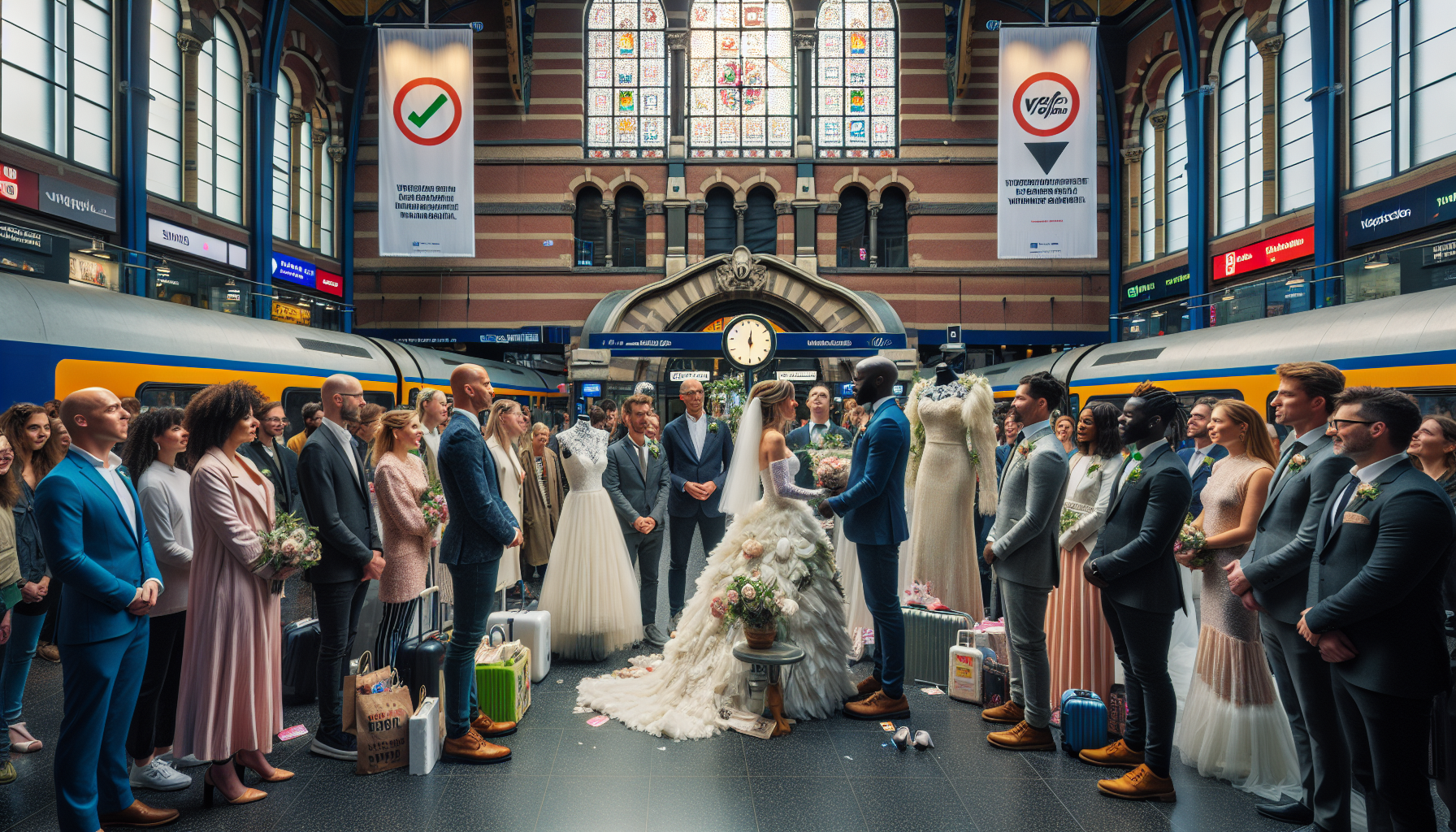
In a unique celebration held at the Netherlands’ busiest railway station in Utrecht, 42-year-old Lara Peters wore a second-hand wedding dress she had chosen just two days prior. “I knew within 30 minutes that this was the one,” she said, emphasizing her commitment to sustainability. The dress was sourced from a shop operated by Free Fashion, a Dutch foundation dedicated to recycling clothing to combat environmental waste—a cause deeply important to Peters.
Alongside her 44-year-old husband, Mathijs Dordregter, the couple embraced sustainability as the central theme of their wedding, with Free Fashion playing a key role in organizing the event. The foundation stresses that adopting such eco-friendly practices is essential globally to reduce over-consumption and its damaging impact on the planet.
“The message that you can choose sustainable options even on your wedding day is very important to me,” Peters explained. Working in communications within the sustainable development sector, her choice to hold the ceremony amid the bustling Utrecht rail station reflected a meaningful connection to her professional values.
Nina Reimert from Free Fashion highlighted the environmental cost of traditional wedding dresses, noting that their production generates emissions comparable to driving 250 kilometers (155 miles) by car. She added that these dresses are often made from complex materials, predominantly polyester, making recycling extremely difficult. With approximately 17,000 weddings annually in the Netherlands, the cumulative emissions are substantial, describing the situation as “a nightmare.”
To raise awareness about the excessive consumption linked to many weddings, Free Fashion launched an online campaign encouraging couples to rethink their approach to the big day. The campaign draws on the traditional wedding rhyme: “Something old, something new; Something borrowed, something blue,” promoting the idea of reusing and recycling.
Lot van Os, co-founder of Free Fashion, emphasized that choosing a second-hand bridal gown—typically worn only once—sends a powerful message. “When you celebrate love, you should also celebrate love for the planet,” he stated. The foundation’s 800 volunteers are frequently sought after by local governments aiming to meet waste reduction and recycling goals. Additionally, Free Fashion collaborates with businesses to facilitate clothing exchanges among employees.
Van Os described this shift towards exchanging rather than continuously purchasing new items as a necessary “circular transition” that society must undergo. “It’s not a matter of if but when we are going to change,” he asserted.
To reinforce the wedding’s sustainability focus, a pop-up shop at the station offered numerous wedding dresses free of charge to anyone willing to embrace the concept. A sign outside the store declared, “There are now already enough clothes in the world for the next six generations.”
Both bride and groom wore pre-owned outfits, as did all their guests. The eco-conscious theme extended beyond attire: the wedding meal was vegetarian, reducing environmental impact, and attendees traveled by bicycle or public transport. Peters added, “Everything I bought for the wedding was already used at other weddings.” Regarding her dress, she promised, “It’s not going to be hanging in my closet!”
