



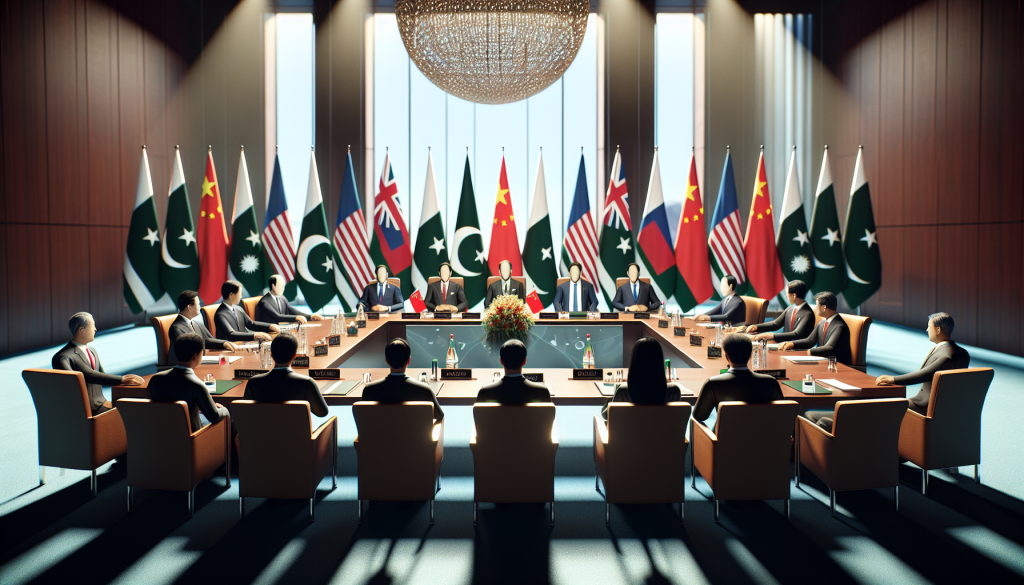
Islamabad has ramped up diplomatic initiatives aimed at fostering stability across the Middle East and Gulf regions through a series of high-level engagements with foreign ministers from key allied nations, the Foreign Office announced in a briefing.
Notably, the Foreign Office spokesperson lauded China’s proactive involvement in addressing the Afghanistan situation, underscoring Beijing’s significant contribution to regional peace efforts. Meanwhile, it was affirmed that Operation Ghazib lil Haq remains active with no alterations to its current status.
During the second ministerial meeting held in Islamabad, all participating foreign ministers convened with Prime Minister Shehbaz Sharif, with discussions extending 15 minutes beyond the planned schedule. Deputy Prime Minister Ishaq Dar provided updates on the stances of the United States and Iran, while the quartet of ministers collectively agreed to enhance coordination and bilateral relations to ease regional tensions.
In a related development, Ishaq Dar undertook a one-day visit to China, where he met with his Chinese counterpart to deliberate on the regional dynamics and the Afghanistan issue. Together, Pakistan and China introduced a five-point plan designed to reinstate peace and stability in the Middle East. This initiative has garnered international acclaim and backing. Both nations emphasized the necessity of an immediate ceasefire, safeguarding the sovereignty of Iran and Gulf states, and ensuring secure navigation through strategic maritime corridors such as the Strait of Hormuz.
Simultaneously, Prime Minister Sharif engaged in telephone conversations with the Crown Prince of Kuwait, the Iranian president, and the European Council president. He condemned recent attacks and reiterated Pakistan’s dedication to mediation and diplomatic solutions. Additionally, eight Islamic countries collectively condemned restrictions imposed on worship at Al-Aqsa Mosque and Christian churches in Jerusalem.
The Foreign Office highlighted that escalating tensions in the Middle East are detrimental to all parties involved. It stressed Pakistan’s ongoing commitment to engaging with regional and global partners—including Saudi Arabia, Turkey, Egypt, and Afghanistan—to prevent further escalation and promote dialogue as the sole sustainable path to peace.

Leave an opinion