

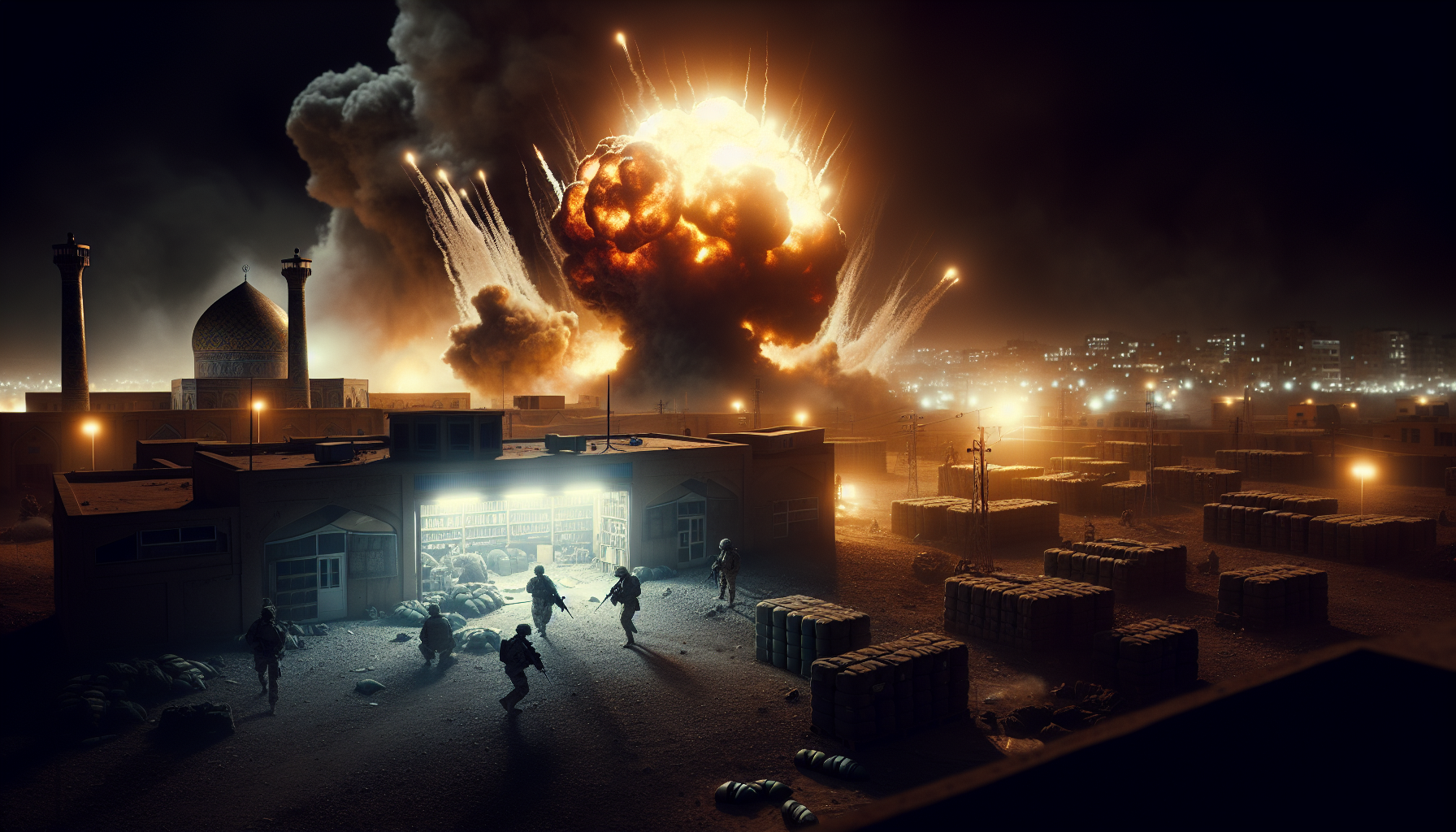
Tensions in the Middle East have intensified following a precision airstrike by the United States targeting a significant military facility in Isfahan, Iran. The operation employed heavy bunker-buster munitions aimed at a heavily fortified ammunition depot, resulting in a series of large secondary explosions that lit up the night sky.
The full extent of the damage to the structure is still being evaluated, but the magnitude of the blasts points to a substantial setback for the depot’s storage capacity. The strike occurred in the early hours of Tuesday and focused on a site long recognized as a central hub for military logistics and munitions stockpiling.
Reports indicate the US used 2,000-pound penetrator bombs designed to penetrate reinforced concrete and reach underground levels. Local eyewitnesses and social media videos from central Iran captured the impact moment, followed by a prolonged sequence of violent detonations, suggesting the ignition of a large weapons cache.
Despite the scale of the explosions, Iranian state media has minimized the incident, describing it as causing only “limited damage” to a military research center. Meanwhile, the timing of the strike coincides with escalating regional hostilities, prompting speculation about coordination among Western allies.
The Pentagon has acknowledged the strike as a unilateral effort to degrade Iran’s offensive capabilities. Analysts view this action as part of a broader strategy to secure vital maritime routes and energy corridors in the region. The attack has also unsettled global markets amid fears over the stability of the Strait of Hormuz and the risk of retaliatory escalation.
International calls for restraint are growing as satellite imagery is being analyzed to assess the strategic impact of the strike on the ground. The situation remains fluid, with the potential for further developments in this volatile region.
