

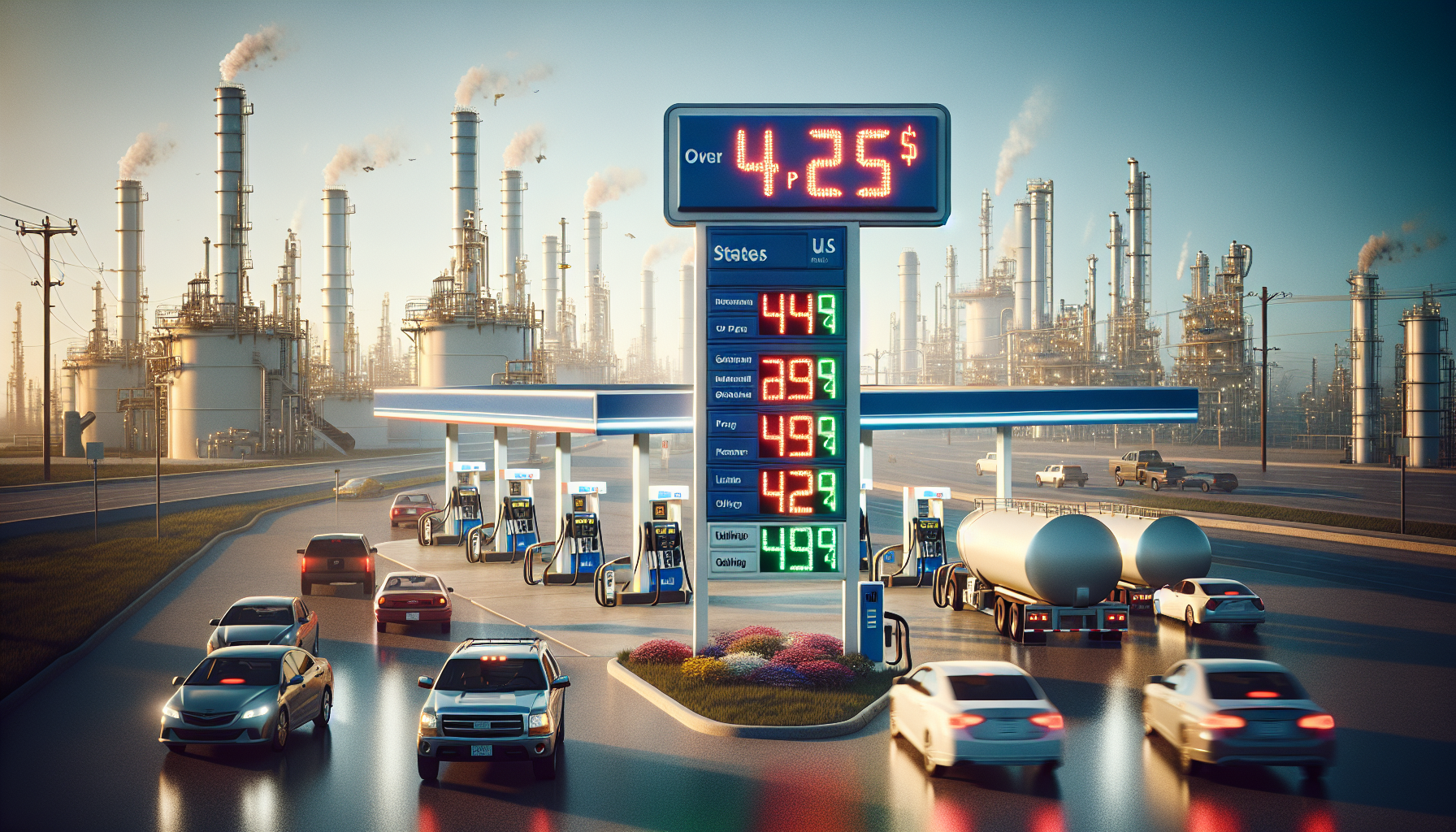
The national average retail price of gasoline in the United States exceeded $4 per gallon on Monday, marking the first time in more than three years this threshold has been crossed. This increase coincides with ongoing conflict involving the US and Israel against Iran, which has significantly unsettled global energy markets.
The last time prices reached this level was in August 2022, following Russia’s invasion of Ukraine. This $4 milestone is often viewed by analysts as a psychological barrier for consumers. The surge in fuel costs is linked to Iran’s effective closure of the Strait of Hormuz, a critical passage for global oil trade, which has caused prices for oil and other goods to escalate.
Rising fuel expenses are increasingly straining American household budgets, which were already under pressure from broader inflationary trends. This situation has also become a political challenge for President Donald Trump and the Republican Party as they prepare for the November midterm elections, aiming to maintain their slim majorities in Congress. Trump had pledged to reduce energy costs and boost domestic oil and gas production, but his administration has faced volatile markets, geopolitical tensions, and fluctuating policies on tariffs and trade.
Since the US and Israel launched attacks on Iran at the end of February, the national average price for gasoline has risen by approximately $1.06 per gallon, a 36% increase. Analyst Pavel Molchanov from Raymond James noted that sudden conflicts tend to cause sharp spikes in gasoline prices, as seen with the Iran conflict and previously with Russia’s invasion of Ukraine in 2022. While oil prices soared globally during both crises and emergency reserves were utilized, Molchanov anticipates this current price surge to be shorter-lived, expecting a cooling trend within the coming weeks. However, prices could climb further if crude oil costs continue their upward trajectory.
On Monday, US oil futures settled at $102.88 per barrel, up $3.24, following a more than $3 increase during Asian trading after reports of an attack on an oil tanker at a Dubai port in Kuwait. In response to rising energy prices amid the conflict, the Trump administration has temporarily waived the Jones Act shipping law, allowing foreign-flagged vessels to transport fuel, fertilizer, and other goods between US ports. Industry experts predict this measure will have only a limited effect on curbing price increases.
The impact of high gasoline prices on American households is significant. A /Ipsos poll found that 55% of respondents reported their finances had been affected at least somewhat by the rising gas costs, with 21% stating the impact was substantial. Economist Jeremy Siegel of WisdomTree emphasized that the critical issue is not just crude oil prices but gasoline prices, which are the most visible to consumers. He explained that price jumps in gasoline immediately affect consumer psychology, which matters even if the broader economic consequences are more balanced than media headlines suggest.
