

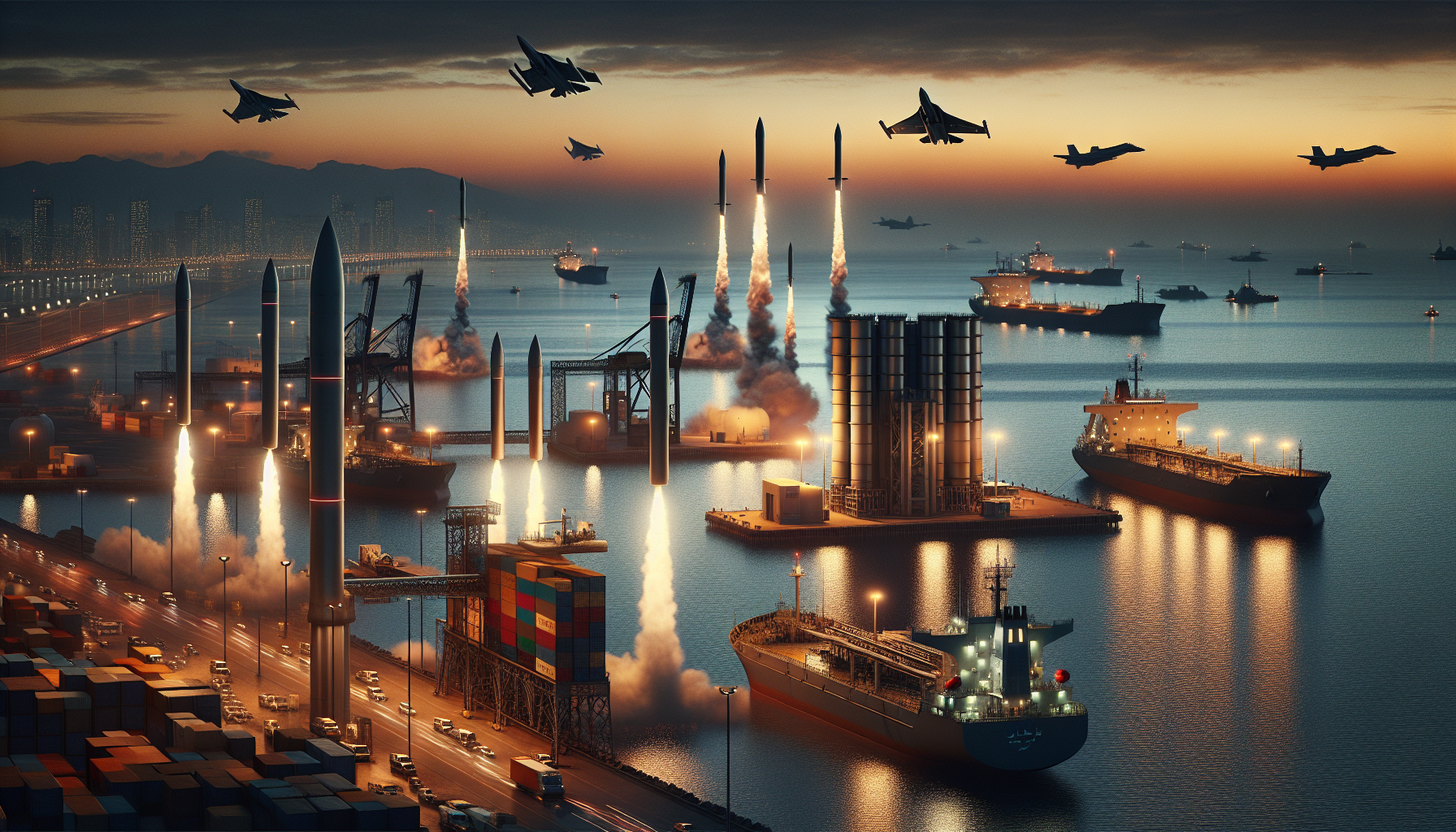
The conflict that erupted on February 28, 2026, following surprise US-Israeli airstrikes known as Operations Roaring Lion and Epic Fury, has now extended into its second month. Triggered by the assassination of Supreme Leader Ali Khamenei and other senior Iranian officials, the war has involved over 11,000 combined strikes targeting Iranian sites. Iran and its Axis of Resistance allies continue to launch missile and drone attacks, while the Strait of Hormuz remains a critical hotspot affecting global oil markets.
In a significant development today, sirens sounded across the Israeli port city of Haifa amid reports of incoming missile threats. Israeli military forces have been placed on high alert in response to Iranian launches, marking the latest wave of retaliatory strikes aimed at Israeli infrastructure. Meanwhile, Yemen’s Houthi movement escalated its involvement by conducting its second attack since joining the conflict, firing ballistic missiles and drones toward southern Israel. Although these projectiles were intercepted, the move signals a widening regional dimension to the war.
Former US President Donald Trump, speaking aboard Air Force One and via Truth Social, asserted that Iran has experienced a “regime change” following Khamenei’s death, with Mojtaba Khamenei now assuming the role of Supreme Leader. Trump indicated that negotiations are ongoing and suggested the US may reach a deal. However, he warned of harsh repercussions—including strikes on Iranian power plants, oil wells, and Kharg Island—if the Strait of Hormuz remains closed.
On the military front, US and Israeli forces have inflicted substantial damage on Iran’s strategic capabilities. Four major ballistic missile production sites—Khojir, Shahroud, Parchin, and Hakimiyeh—along with numerous launch bases, have been struck, effectively halting Iran’s production of short- and medium-range missiles until reconstruction is possible. Additionally, repeated attacks have targeted nuclear and defense facilities at Natanz, Arak, Isfahan, and submarine research centers. The Israeli Defense Forces report that their campaign against these high-priority targets is nearing completion.
In retaliation, Tehran has launched multiple missile barrages targeting Israel, particularly near Beersheba, and US military bases in the Gulf region. These strikes have caused damage to Israeli industrial sites and resulted in limited civilian casualties. Iranian proxies, including Hezbollah, continue to carry out attacks in Lebanon, further intensifying the regional conflict.
The economic consequences are pronounced, with oil prices surging above $110 per barrel amid disruptions caused by Houthi attacks and Iran’s control over the Strait of Hormuz. Brent crude is trading between $110 and $116 per barrel, representing one of the largest supply shocks in history. Gulf oil production has declined by millions of barrels daily, prompting analysts to warn of more severe impacts if the strait remains blocked beyond one to three weeks. Globally, this has led to higher gasoline prices, stock market instability, and shortages in fertilizer supplies due to disrupted shipping routes.
Casualty figures as of late March reveal heavy losses: Iran has suffered between 2,000 and 7,800 deaths, including military personnel and civilians, with tens of thousands wounded. Several cultural heritage sites, some recognized by UNESCO, have also been damaged. Israel reports over 24 fatalities among civilians and soldiers, with thousands more injured. US forces have experienced limited troop deaths, though bases in Bahrain, Jordan, Kuwait, and other locations have sustained damage. Regional allies have reported dozens of deaths, contributing to a total exceeding 3,400 fatalities across the region. The ongoing 2026 Lebanon war, marked by escalated Hezbollah activity, has added several hundred more casualties.
Diplomatic efforts are underway to de-escalate tensions. Foreign ministers from Saudi Arabia, Turkey, Egypt, and Pakistan convened urgently in Islamabad to seek a resolution. Partial progress includes Iran permitting a limited number of Pakistani-flagged vessels—two per day—to transit the Strait of Hormuz. The United States has deployed thousands of additional troops and Marines to the area but maintains that no full-scale ground invasion is planned, focusing instead on air operations and diplomatic channels.
