



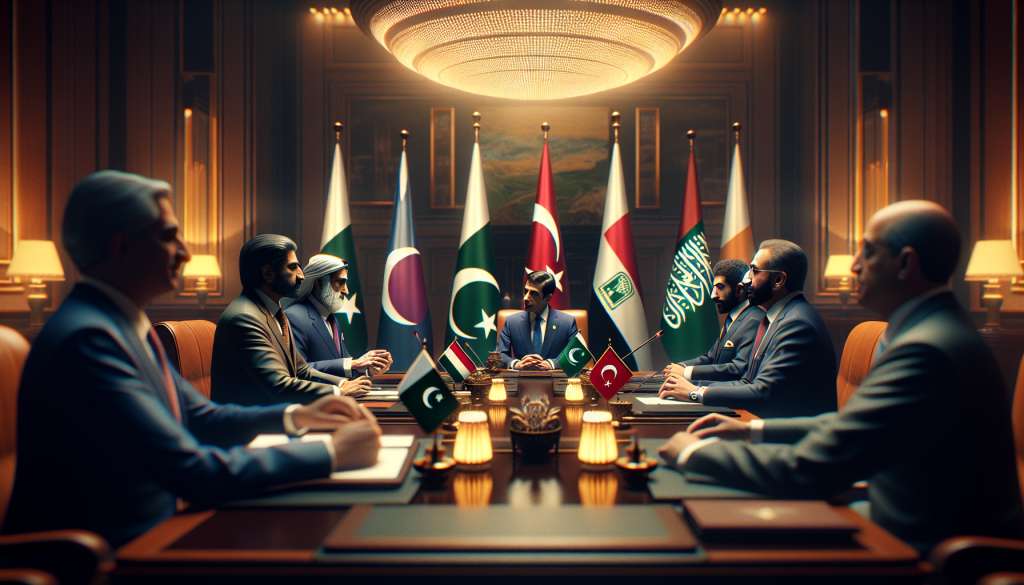
Pakistan has recently transitioned from a stance of cautious neutrality to an active mediator in the escalating US-Iran conflict that intensified in late February 2026 following US and Israeli strikes. This shift is driven primarily by Pakistan’s national security interests rather than ideological alignment. Demonstrating this pragmatic approach, Pakistan is preparing to host talks, carrying a 15-point US proposal to Iran, and organizing a quadrilateral meeting of foreign ministers from Saudi Arabia, Türkiye, and Egypt in Islamabad on March 29-30, 2026, aiming to stabilize the volatile multipolar Middle East.
Pakistan’s mediation efforts are supported by its strategic geography and historical ties. Sharing a 900-kilometer border with Iran, much of which lies in the unstable Balochistan region plagued by extremist groups like Jaish al-Adl, Pakistan faces direct security risks from any deterioration in Persian Gulf relations. Iran has been a significant, albeit intermittent, energy supplier to Pakistan, and instability in the region could exacerbate insurgency in Pakistan’s western provinces.
Historically, Pakistan and Iran share cultural and religious connections, with both Shia and Sunni populations, as well as past cooperation against Soviet forces in Afghanistan and periodic border agreements. Simultaneously, Pakistan has been a Major Non-NATO Ally (MNNA) of the US since 2004. High-level Pakistani officials, including Prime Minister Shehbaz Sharif and Foreign Minister Ishaq Dar, have engaged with both Tehran and Washington, conveying US communications on sanctions relief, nuclear and missile restrictions, Strait of Hormuz access, and proxy group management. Pakistan has expressed willingness to host indirect or direct US-Iran talks in Islamabad.
From a defense perspective, Pakistan’s mediation is a strategic move to prevent conflict escalation that could threaten the China-Pakistan Economic Corridor (CPEC), which depends partly on Gulf shipping routes. For Pakistani defense planners, this mediation enhances Pakistan’s strategic value to Washington without alienating Beijing, Pakistan’s key economic and military partner. Achieving even partial success, such as establishing humanitarian corridors or local ceasefires, would bolster Pakistan’s reputation as a pivotal state capable of bridging divides beyond the reach of major powers.
However, challenges remain significant. Iran’s response has been tepid, and the US administration under President Trump has sent inconsistent signals. Additionally, India’s alignment with Israel and its potential to exploit Pakistan’s focus on mediation adds complexity to the situation.
In a notable development, the upcoming March 2026 meeting in Islamabad of foreign ministers from Pakistan, Saudi Arabia, Türkiye, and Egypt marks the formation of an informal middle-power grouping aimed at de-escalating the Iran conflict, securing Red Sea and Gulf stability, and promoting regional peace. This initiative builds on previous informal discussions, such as those held in Riyadh, and reflects Pakistan’s efforts to engage Sunni-majority states.
The involvement of Saudi Arabia and Egypt brings financial resources, strategic depth in the Gulf and Red Sea, and Sunni influence, reinforcing Pakistan’s longstanding security ties with Saudi Arabia, including past troop deployments. This alliance also positions Pakistan as a key player in safeguarding vital maritime routes.
Türkiye contributes a significant defense industry dimension, crucial for Pakistan’s military modernization. The two countries have collaborated on unmanned aerial vehicles (UAVs), with Turkish Bayraktar TB2 and Akıncı drones already operational in Pakistan. Advanced negotiations are underway to establish a combat drone assembly facility in Pakistan, including technology transfers for stealth and long-endurance drones, as well as cooperation on naval platforms like MILGEM-class corvettes to be locally built at Karachi Shipyard. This partnership diversifies Pakistan’s defense procurement beyond China and Western sources and enhances its asymmetric warfare capabilities, particularly in drone warfare.
This emerging ‘Stabilization Axis’ serves as a force multiplier, circumventing deadlocks in international organizations such as the OIC, Arab League, and UN by focusing on shared interests in preventing conflict escalation, protecting economic lifelines, and asserting collective Muslim leadership within a multipolar global order. For Pakistan, this translates into a substantial increase in diplomatic influence beyond traditional military power balances.
Domestically, this assertive foreign policy yields multiple benefits. Economically, it safeguards the viability of CPEC Phase 2 industrial zones, energy projects, and connectivity corridors to Central Asia and the Middle East. Strategically, Pakistan hedges against coercion by any single power through diversified relationships with the US (as MNNA), China (via CPEC/BRI), Gulf states, and Türkiye. This approach enhances Pakistan’s autonomy, leveraging its nuclear deterrent and large standing army.
Pakistan’s military leadership, led by Field Marshal Asim Munir, has played a visible role in these diplomatic efforts, consistent with the military’s traditional dominance in national decision-making.
Nonetheless, risks persist, including Pakistan’s economic capacity to sustain this role and manage peripheral threats such as militancy in Balochistan and potential opportunistic moves by India in the eastern sector. Success will be measured by incremental reductions in tensions, resumption of navigation through the Strait of Hormuz, and confidence-building between parties. A critical challenge will be balancing perceptions to avoid alienating Tehran by appearing too close to Washington or vice versa.
In the context of a multipolar Middle East characterized by retrenchment, proxy fatigue, and the rise of middle powers, Pakistan’s calculated pivot aligns with middle-power theory. This rational strategy positions Islamabad as a pragmatic actor in the evolving geopolitical landscape of the Middle East and the broader Islamic world in the 21st century.

Leave an opinion