

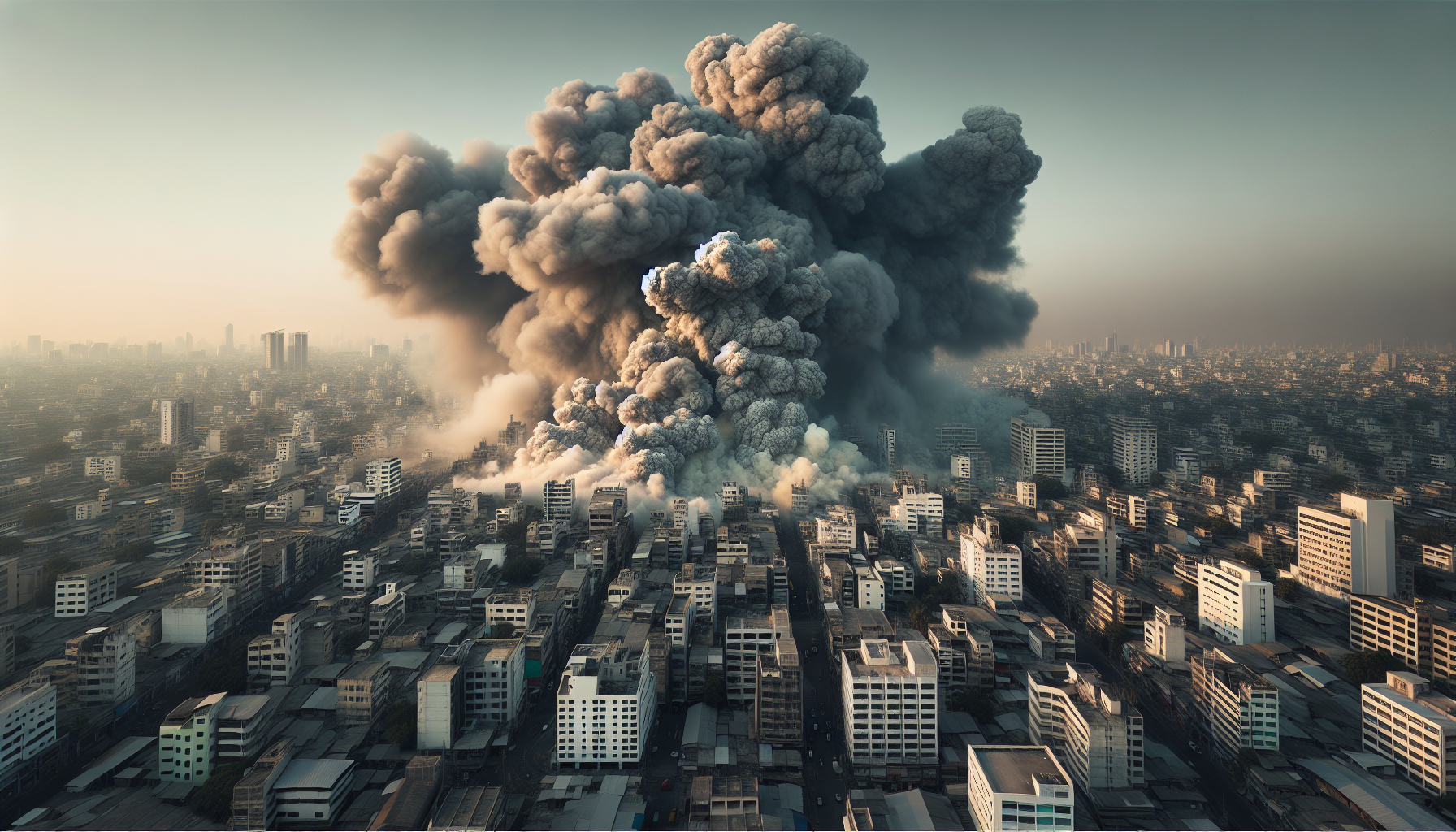
Thick plumes of smoke were seen rising above the southern suburbs of Beirut after an Israeli airstrike targeted the area. This strike marks a continuation of the volatile exchanges between Israel and groups operating in Lebanon. The southern suburbs, known for their dense population and political significance, have frequently been a focal point in regional conflicts. The airstrike has raised concerns about potential civilian casualties and infrastructure damage in this heavily inhabited zone.
In a significant development, the attack underscores the fragile security situation in Lebanon, where Hezbollah and other militant factions maintain a strong presence. Israel has often cited threats from these groups as justification for such military actions. Meanwhile, the international community remains watchful, as escalations in this area could destabilize the broader Middle East peace efforts. The timing of the strike also coincides with heightened diplomatic activities aimed at reducing tensions in the region.
Notably, the impact of this airstrike extends beyond immediate physical damage, potentially influencing political dynamics within Lebanon and its relations with neighboring countries. The southern suburbs of Beirut have historically been a hotspot for conflict, reflecting the complex interplay of local and regional power struggles. As smoke continues to billow, humanitarian concerns are mounting, with calls for restraint and dialogue growing louder among global observers. The incident serves as a stark reminder of the ongoing volatility in this strategically important area.
