

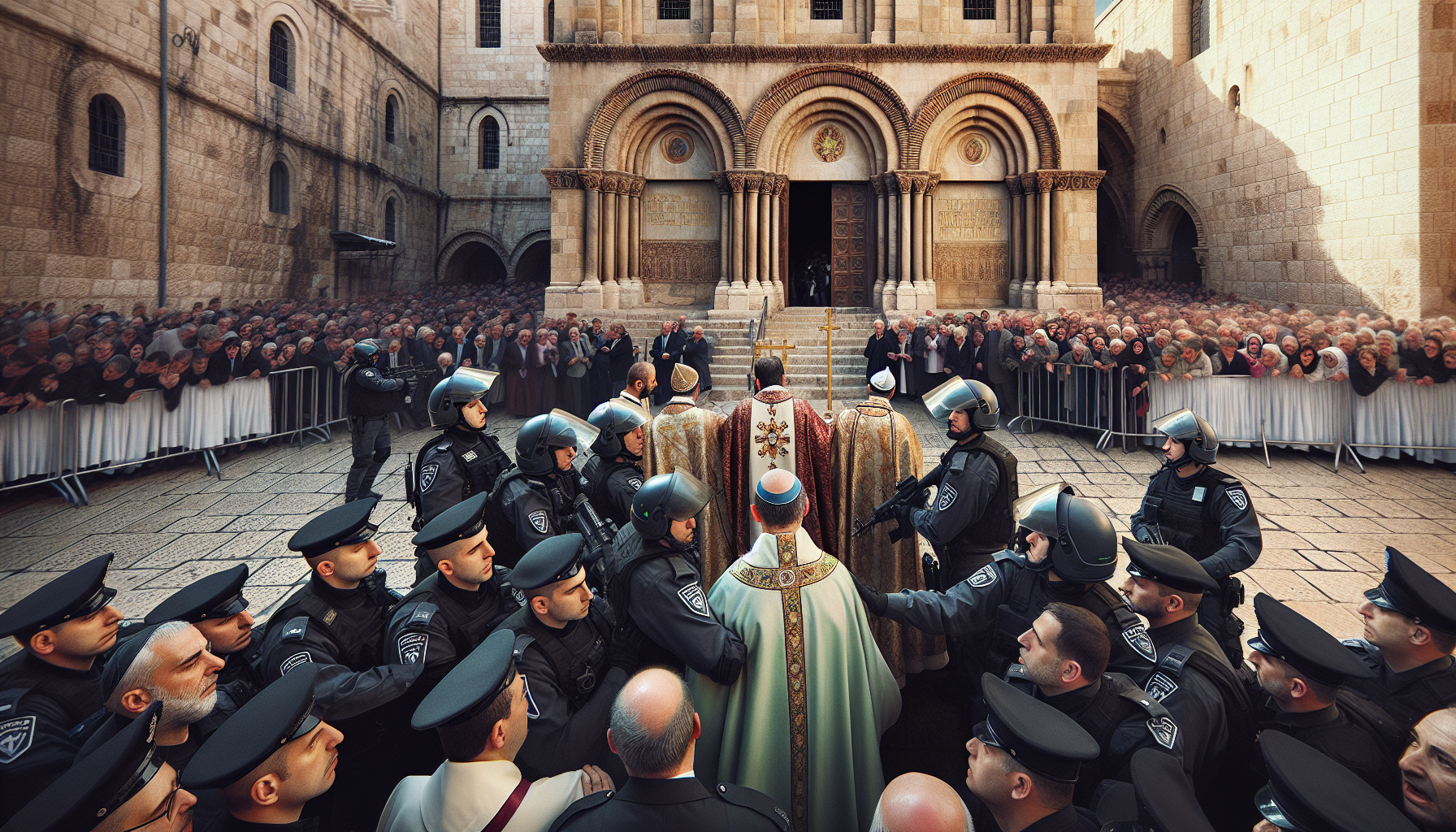
During the observance of Holy Week, Christians in Jerusalem faced significant challenges as Israeli authorities imposed wartime restrictions on religious activities. In a notable incident, Israeli police prevented a Latin Patriarch priest from entering the Church of the Holy Sepulchre, a site sacred to multiple Christian denominations. This action occurred on Palm Sunday, a key day commemorating Jesus’ entry into Jerusalem, underscoring heightened tensions in the city.
The Church of the Holy Sepulchre holds immense religious and historical significance as the traditional site of Jesus’ crucifixion and resurrection, attracting pilgrims worldwide. Restrictions on access during such an important period disrupt longstanding religious practices and exacerbate the already fragile situation in Jerusalem. The move by Israeli police reflects broader security concerns amid ongoing regional conflicts, impacting the freedom of worship for Christian communities.
Meanwhile, the incident highlights the complex intersection of religion, politics, and security in Jerusalem, a city sacred to Jews, Christians, and Muslims alike. The enforcement of wartime measures during a major religious festival has drawn international attention to the challenges faced by minority religious groups in conflict zones. The situation raises questions about the balance between security protocols and the protection of religious rights in contested urban spaces.
