



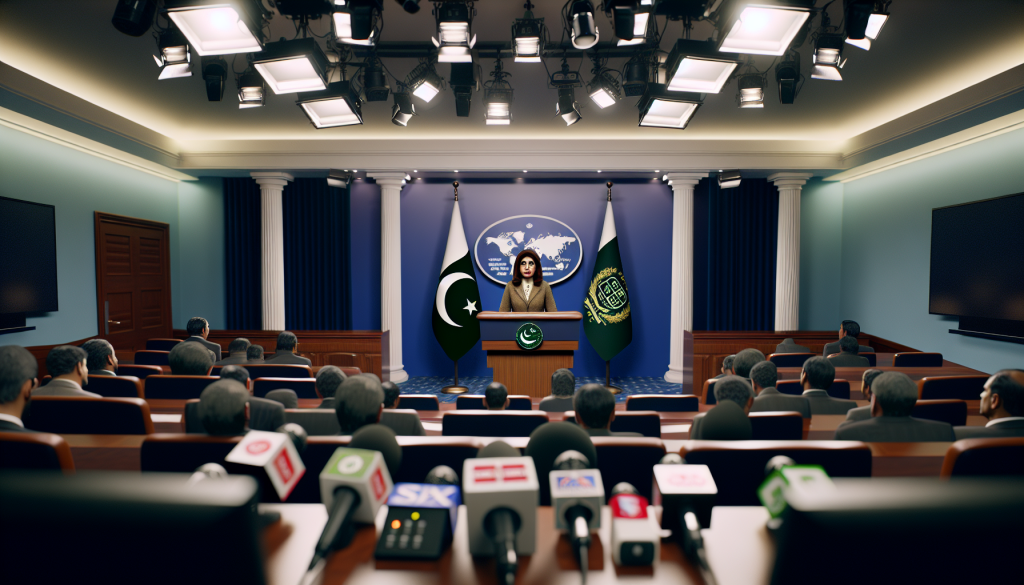
Pakistan’s Foreign Office (FO) on Saturday strongly dismissed the Indian Ministry of External Affairs’ (MEA) expressed concerns regarding Pakistan’s Shia community, labeling the statements as “cynical and diversionary” and describing them as a “deflection masquerading as concern.” This reaction came after India’s MEA referenced remarks attributed to Chief of Army Staff and Chief of Defence Forces Syed Asim Munir.
Earlier this month, CDF Munir held a meeting with Shia clerics in Rawalpindi. The Inter-Services Public Relations (ISPR) issued a statement explaining that the discussion centered on national security and the important role of religious scholars in fostering societal harmony. The ISPR also noted that CDF Munir stressed the importance of preventing the exploitation of religious sentiments to provoke violence within the country.
On Friday, Indian MEA spokesperson Randhir Jaiswal, quoted by an Indian news agency, claimed that these remarks highlighted Pakistan’s “systemic victimisation of minorities.” However, responding the following day, FO spokesperson Tahir Andrabi rejected India’s comments as a deliberate attempt to divert attention from India’s own issues.
Andrabi pointed out that India’s statements fail to conceal its ongoing pattern of discrimination and violence against Muslims, Christians, and other marginalized groups. He cited restrictions on religious worship, mob vigilantism, and targeted attacks on homes and livelihoods as evidence of this troubling trend.
Highlighting documented incidents, Andrabi condemned the rising tide of mob lynchings against Muslims in India, describing it as “deeply abhorrent” and indicative of a climate of unchecked brutality. He revealed that in 2025, more than 55 Muslims were lynched, and since January 2026, over 19 Muslims have been killed by violent mobs.
Furthermore, Andrabi mentioned that extremist groups have attempted the unlawful destruction of 11 mosques. He criticized the perpetrators for often acting with impunity, allegedly supported by state patronage, and rarely facing accountability for their crimes.
In conclusion, Pakistan urged India to address these serious and well-documented human rights concerns within its own borders. The statement called on India to protect Muslim, Christian, and other minority communities in line with its constitutional and international obligations, while refraining from making unfounded and politically motivated accusations against other nations.

Leave an opinion