



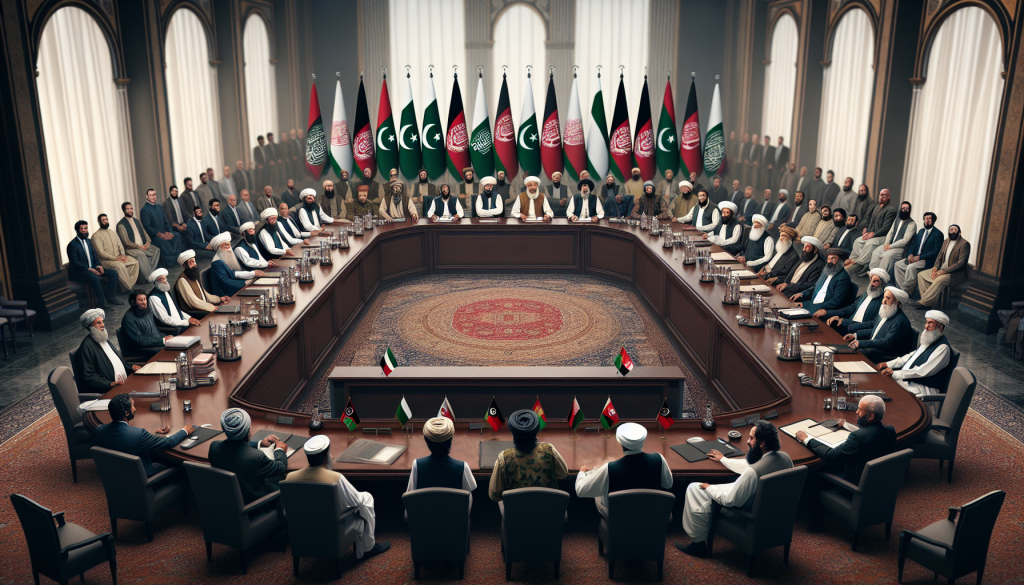
A joint peace jirga between Pakistan and Afghanistan is set to take place in Peshawar, Khyber Pakhtunkhwa, on March 31. The gathering aims to establish a collaborative framework to enhance peace, stability, and dialogue between the two neighboring countries. This announcement was made by former KP chief secretary and Aspire-Khyber Pakhtunkhwa head Arbab Shezad Khan during a press conference alongside Qaumi Islahi Tehreek leader Haji Sohrab Ali Khan.
The jirga is being organized against the backdrop of Pakistan’s ongoing Operation Ghazab lil-Haq, launched last month to target terrorists and their support networks in Afghanistan. This military campaign followed unprovoked aggression by the Afghan Taliban regime along the Pakistan-Afghanistan border.
Arbab Shezad Khan highlighted that the jirga will include prominent political figures, tribal elders, religious scholars, civil society members, business leaders, and media representatives. Political leaders with a history of working towards peace between the two nations have also been invited to participate. The focus will be on fostering mutual respect, building trust, and engaging in serious negotiations aimed at achieving lasting peace.
At the conclusion of the jirga, a joint declaration endorsing peace will be issued and forwarded to the governments of both countries. The primary objective is to create a unified approach to peace and stability, promoting dialogue and negotiations as the way forward. Khan emphasized that the current severe tensions between Pakistan and Afghanistan make this jirga a critical and timely initiative.
Following the March 31 meeting in Peshawar, additional peace jirgas are planned in Quetta and other regions, involving all relevant stakeholders to further chart a path toward regional peace. Participants will urge leaders from both countries to implement an immediate ceasefire, ease tensions, and resolve disputes through diplomatic channels and dialogue.
The recent escalation in tensions stems from Pakistan’s retaliatory measures after suicide bombings in Islamabad, Bajaur, and Bannu, which were traced back to militants operating from Afghan territory. These border clashes reignited months after an October 2025 ceasefire agreement, which was disrupted when the Afghan Taliban regime opened fire at multiple border points without provocation.
Pakistani officials assert that the Afghan forces’ gunfire aimed to facilitate the crossing of khawarij militants into Pakistan. Despite this, Islamabad initially agreed to a ceasefire at Kabul’s request. Subsequently, both countries reached a ceasefire deal mediated by Doha and Turkiye in Qatar, which mandated an immediate halt to terrorism originating from Afghanistan targeting Pakistan.
Follow-up discussions held in Turkiye failed to produce the desired outcomes, as Kabul reportedly used the Istanbul talks to criticize Pakistan rather than address Islamabad’s primary concern regarding terrorism emanating from Afghan soil.

Leave an opinion