



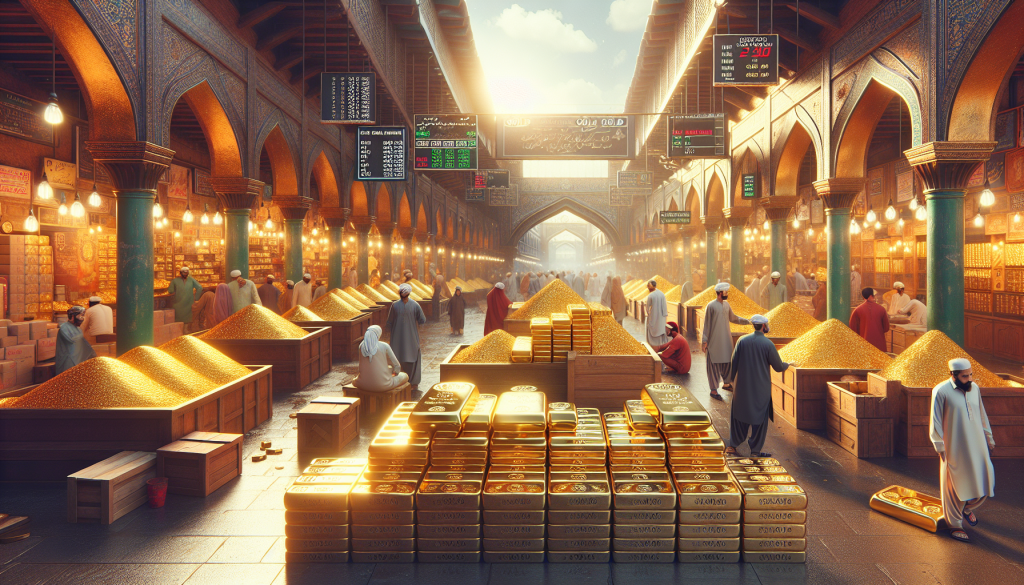
On Saturday, March 28, 2026, gold prices in Pakistan experienced a significant increase, reflecting upward movements in the international bullion market. The All Pakistan Sarafa Gems and Jewellers Association reported that the local gold rate per tola climbed by Rs4,800, reaching Rs472,062 compared to Rs467,262 on the previous trading day.
Similarly, the price for 10 grams of 24-karat gold rose by Rs4,116 to Rs404,717 from Rs400,601. The rate for 10 grams of 22-karat gold also increased by Rs3,774, settling at Rs371,004 from Rs367,230. On the global front, gold prices advanced by $48, moving up to $4,493 from $4,445.
Meanwhile, silver prices in the domestic market remained unchanged. The per tola rate stayed steady at Rs7,454, and 10 grams of silver held firm at Rs6,390. Globally, silver prices also maintained stability at $69.70.
Market analysts maintain a positive outlook on gold’s long-term prospects, emphasizing its role as a safe-haven asset during times of economic and political instability. They highlight gold’s intrinsic worth, finite availability, and independence from government or central bank interventions as reasons it remains a dependable hedge against inflation, currency devaluation, and market fluctuations.
Experts linked the recent price volatility to rising oil costs and escalating geopolitical tensions, particularly following airstrikes involving the United States and Israel targeting Iran. These developments have intensified global economic uncertainty.
Historically, such geopolitical conflicts and financial instability tend to drive investors away from riskier assets like stocks and speculative currencies, boosting demand for precious metals like gold. Beyond its ornamental value, gold continues to be regarded as a financial safeguard, with its appeal growing amid ongoing global uncertainties.

Leave an opinion