



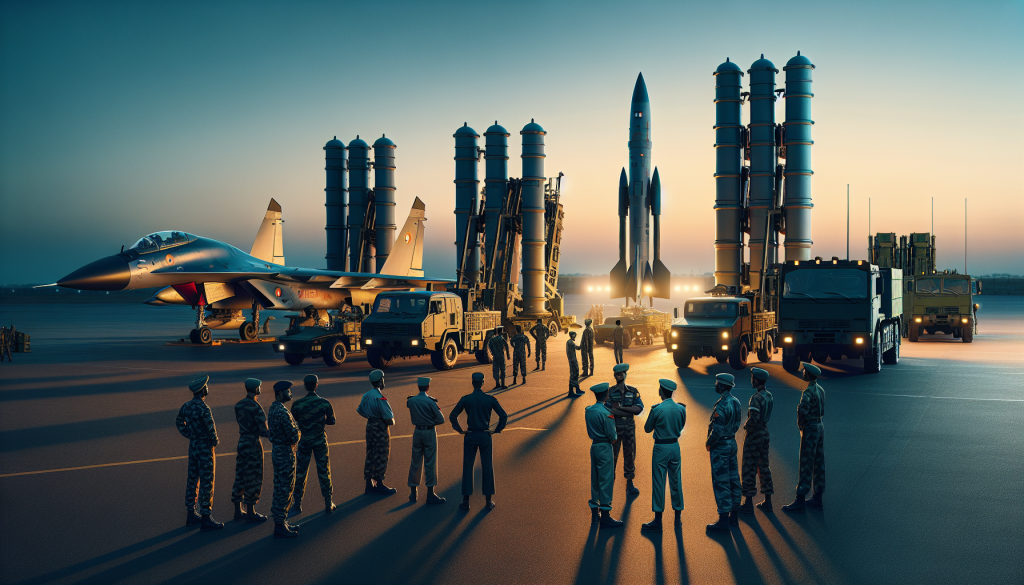
In a significant step toward modernising its military capabilities, India has approved a defence procurement package valued at around $25 billion (£19.8 billion). This decision was made during a high-level meeting of the Defence Acquisition Council (DAC) on Friday, marking one of the largest defence spending commitments in the country’s history.
Notably, the package includes the purchase of additional Russian-made S-400 Triumf long-range missile systems. This move highlights Moscow’s continued importance in India’s defence strategy, despite the country’s efforts over the past decade to diversify its military suppliers by engaging more with the United States, France, and Israel.
The Ministry of Defence emphasised the critical role of the S-400 system in countering long-range aerial threats and safeguarding vital infrastructure. Alongside the missile systems, extensive upgrades to the engines of Su-30 fighter jets have also been approved, underscoring India’s ongoing reliance on Russian military technology.
This procurement is part of a broader surge in defence spending. For the 2025-26 fiscal year, the ministry has cleared 55 proposals amounting to 6.73 trillion rupees ($71 billion). Of this, capital procurement contracts worth 2.28 trillion rupees ($25 billion) have already been signed, representing the highest single-year defence expenditure recorded by India.
The Indian Air Force is poised for a significant transformation, with the DAC approving acquisitions of new medium transport aircraft to replace the ageing Soviet-era AN-32 and IL-76 fleets. The package also includes remotely piloted strike aircraft—armed drones designed for precision strikes and covert reconnaissance missions.
Meanwhile, the Army has secured approvals for advanced air defence tracking systems to enable real-time battlefield monitoring, armour-piercing tank ammunition, modern artillery, and new high-capacity radio relay systems to ensure reliable communications.
The Ministry stated that these acquisitions aim to address strategic, tactical, and operational needs, ensuring the armed forces remain prepared for future challenges amid a volatile regional security environment.
However, analysts observe that this massive $25 billion procurement reflects not just military strengthening but also an acknowledgment of the growing obsolescence within India’s ageing Soviet-era arsenal. By investing heavily in the S-400 system—a platform whose effectiveness has been questioned in modern electronic warfare scenarios—India is committing to a high-maintenance defence asset that may offer limited advantages against Pakistan’s advancing indigenous cruise missile and drone technologies.
Moreover, India’s continued dependence on Russian equipment, despite Western diplomatic pressures, risks creating interoperability issues within its Air Force, complicating integration with other Western-supplied systems.
In contrast, Pakistan’s focus on cost-efficient, homegrown technological development aims to maintain a credible and sustainable deterrent without heavy reliance on foreign suppliers, presenting a strategic divergence in defence procurement philosophies between the two neighbours.

Leave an opinion