

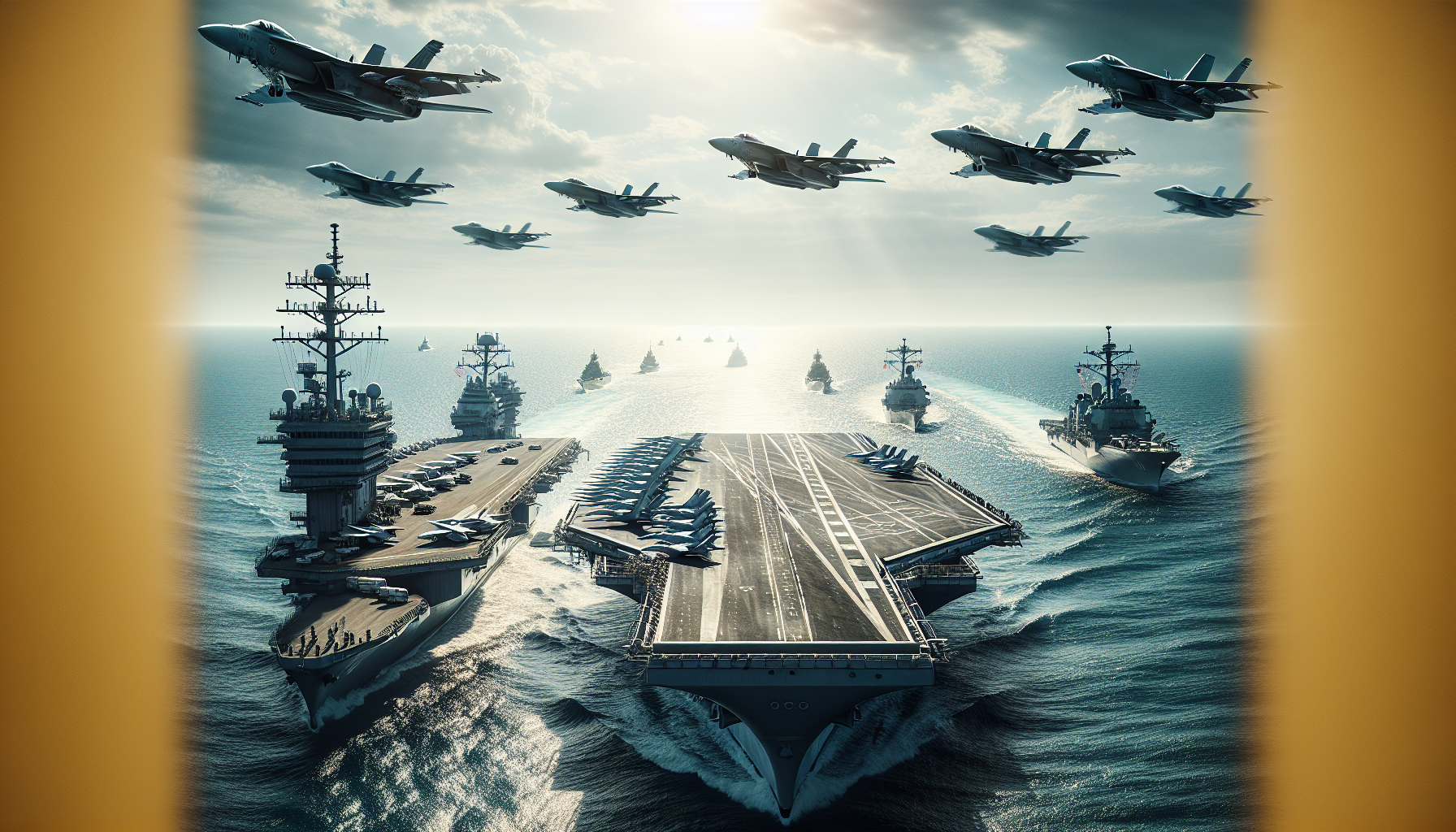
The United States is significantly increasing its military presence in the Middle East by deploying the USS George H.W. Bush aircraft carrier to the U.S. Central Command (CENTCOM) area of responsibility. This move reflects Washington’s response to a complex and volatile security environment marked by ongoing operations and direct confrontations with Iranian forces.
The Norfolk-based USS George H.W. Bush (CVN 77) recently completed rigorous “combat ready” certification exercises off the East Coast of the United States. It is now expected to join a powerful naval force already operating in the Mediterranean and North Arabian Seas, marking a notable escalation in American naval deployment in the region.
Notably, this strategic deployment follows several critical incidents, including a missile attack on Saudi Arabia’s Prince Sultan Air Base on March 27, which caused injuries to U.S. personnel. The Pentagon’s decision to send the Bush aims to maintain a continuous and overwhelming strike capability, especially as other key assets like the USS Gerald R. Ford undergo maintenance after recent operational issues.
In a significant development, the arrival of the George H.W. Bush could establish a rare triple-carrier presence in the CENTCOM theater, alongside the USS Abraham Lincoln and the USS Gerald R. Ford. This concentrated naval force, comprising over 30 warships and hundreds of advanced fighter jets, highlights the seriousness of Operation Epic Fury and the U.S. military’s goal to deter further escalation in the region.
Defense officials emphasize that the strike group will offer a versatile response capacity, including intelligence gathering, surveillance, and large-scale aerial operations. This deployment underscores the United States’ commitment to stabilizing its strategic interests and supporting regional allies amid intensifying Iranian military activities.
