

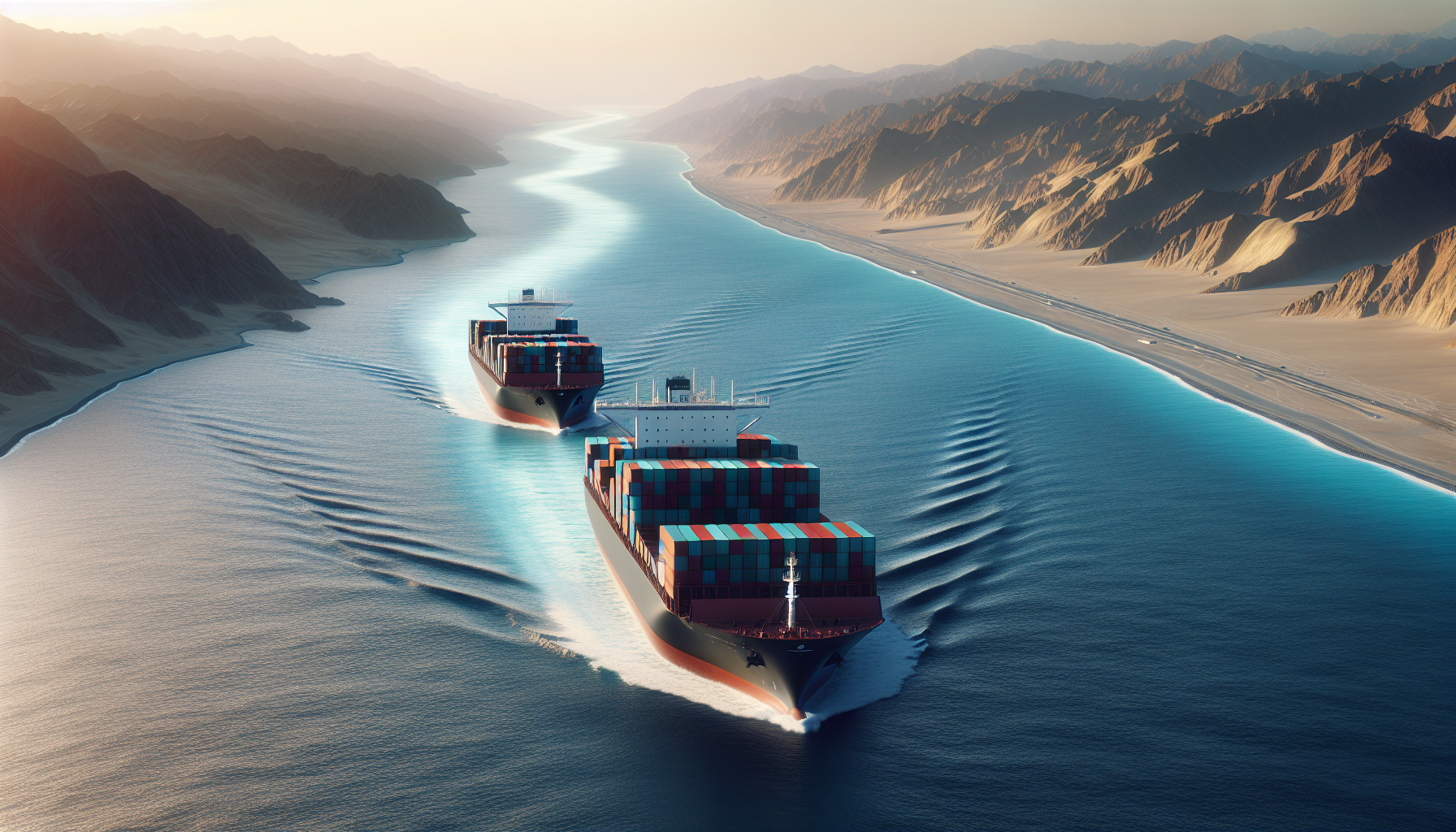
Two Chinese container vessels operated by the state-owned COSCO Shipping turned back after attempting to exit the Gulf through the Strait of Hormuz on Friday, underscoring persistent dangers to maritime traffic despite Iran’s promises of safe passage for allied nations.
The ships, CSCL Indian Ocean and CSCL Arctic Ocean, both flying Hong Kong flags, had been stranded in the Gulf since tensions escalated following the US-Israel conflict with Iran on February 28. They tried to navigate the strategic waterway at 0350 GMT but reversed their course, ship-tracking information.
These vessels had only recently resumed operations after COSCO reopened container shipment bookings to Gulf destinations including the United Arab Emirates, Saudi Arabia, Bahrain, Qatar, Kuwait, and Iraq. Nevertheless, the incident highlights the fragile nature of maritime transit through the Strait of Hormuz.
Iranian authorities have stated that vessels from friendly countries such as China, Russia, India, Iraq, and Pakistan would be granted passage. However, recent events indicate that approvals remain selective and conditional. Kpler analyst Rebecca Gerdes emphasized that safe passage could not be assured, noting that Friday was the first attempt by a major shipping company to cross since the conflict began.
Reports indicate that Iran’s Revolutionary Guards forced several vessels to turn back, with state media confirming that at least three container ships retreated after receiving warnings from Iranian naval forces.
The Strait of Hormuz, a vital chokepoint for global energy shipments, has been heavily disrupted since the conflict’s onset. Iran’s restrictions have left hundreds of vessels and thousands of seafarers stranded in the Gulf, severely impacting crude oil exports from regional producers and liquefied natural gas shipments from Qatar.
Iran has consistently maintained that only selected ships would be allowed to pass, issuing warnings that vessels connected to the United States, Israel, or their allies would be denied transit. On Wednesday, Iranian Foreign Minister Abbas Araghchi reiterated that Tehran would permit passage to “friendly nations” but did not provide explicit operational guarantees for the shipping lanes.
Meanwhile, limited maritime movement has continued, including select oil and gas shipments facilitated through diplomatic coordination. However, overall traffic remains restricted, with Iranian tankers dominating outbound flows.
US President Donald Trump claimed that Iran allowed some oil tankers to pass as a goodwill gesture, though details of this remain unclear. China has continued diplomatic engagement with both Iran and Pakistan, with Chinese Foreign Minister Wang Yi suggesting that initiating peace talks could help restore normal navigation through the Strait of Hormuz.
These developments come as global shipping companies remain cautious, with industry experts warning that ongoing tensions could further disrupt energy markets and international trade if the situation does not stabilize.
