

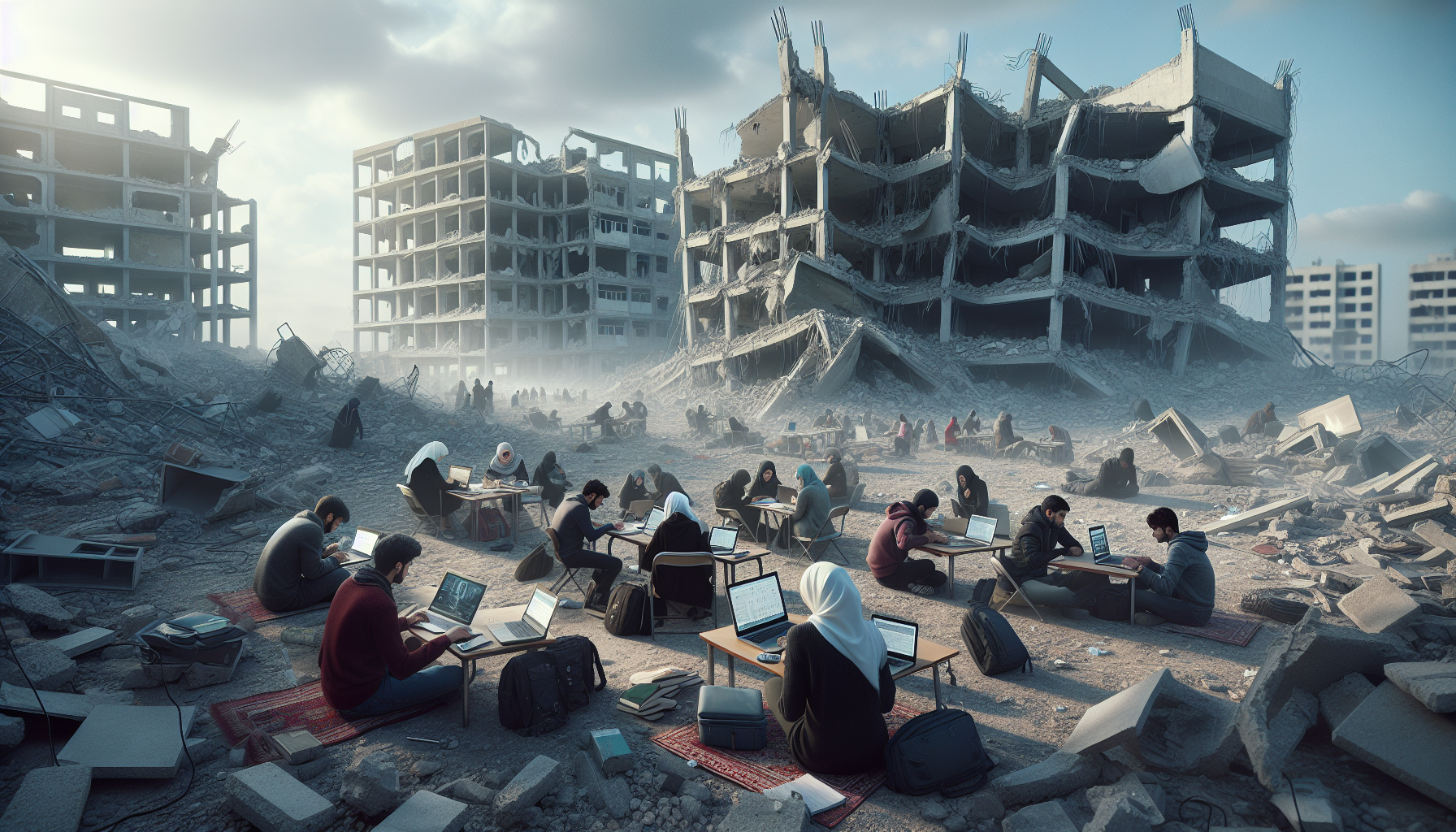
Students in Gaza are confronting severe obstacles in continuing their higher education after the complete destruction of all universities in the region. This devastation has left thousands without access to traditional academic institutions, severely disrupting their educational trajectories. The loss of these facilities not only affects current students but also threatens the future intellectual and professional development of the community. The destruction is part of the broader conflict that has repeatedly impacted Gaza’s infrastructure and civilian life.
In a significant development, alternative learning methods are being explored to mitigate the educational crisis. Online courses, remote learning platforms, and international scholarships have become crucial lifelines for students determined to pursue their academic goals despite the harsh circumstances. However, limited internet access and ongoing instability pose additional challenges to these solutions. The situation highlights the resilience of Gaza’s youth and the urgent need for international support to restore educational opportunities.
Meanwhile, the broader implications of this educational disruption extend beyond individual students. The absence of universities undermines Gaza’s socio-economic recovery and long-term development prospects. Higher education institutions play a vital role in fostering innovation, critical thinking, and skilled workforce development, all essential for rebuilding the region. The international community’s response to this crisis will be pivotal in shaping Gaza’s future educational landscape and the prospects of its younger generations.
