

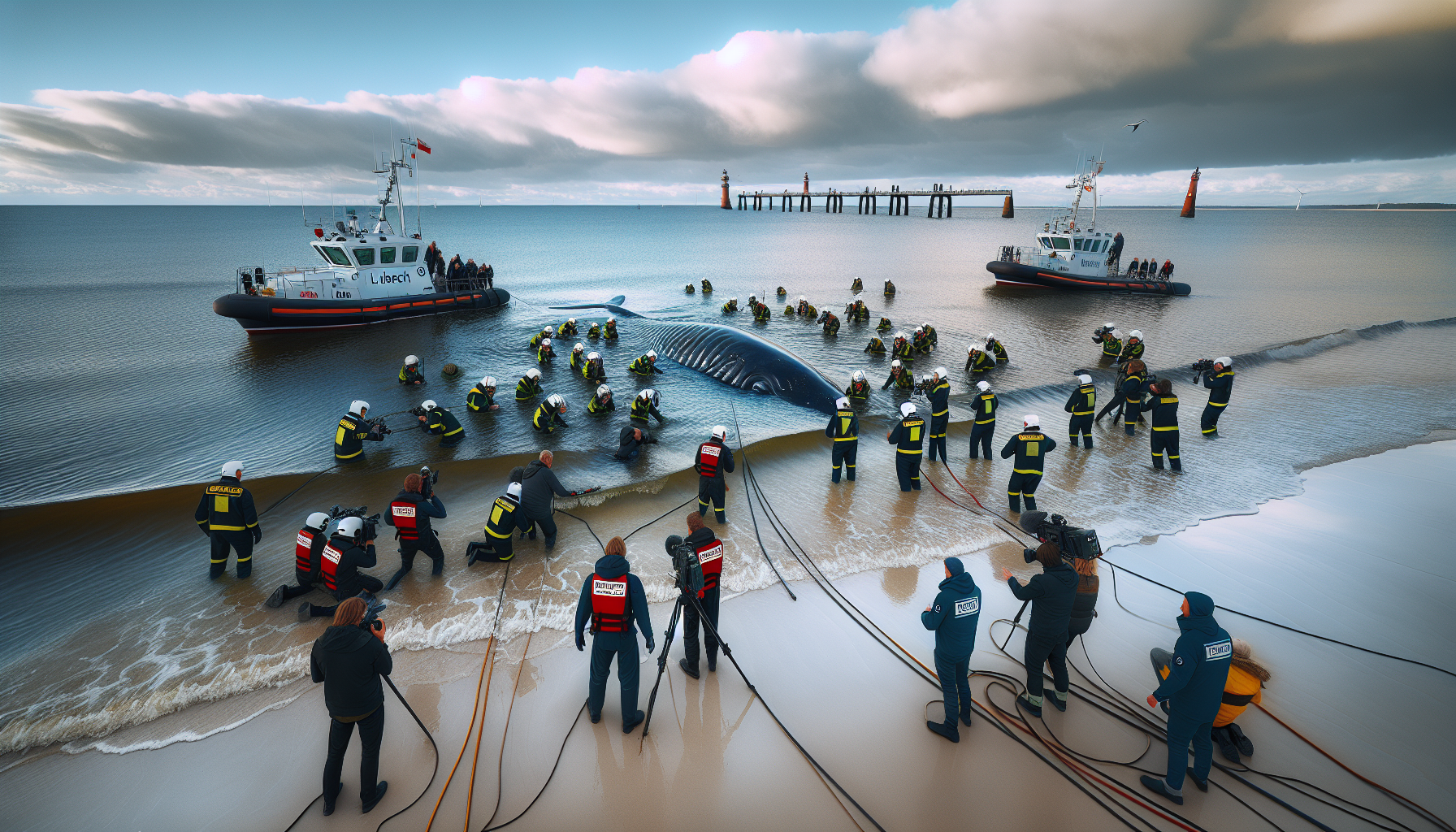
In a significant development along the Baltic coast, rescue teams successfully aided a whale that had become stranded on a sandbank in Lübeck Bay. The operation involved coordinated efforts from local authorities and marine experts to ensure the animal’s safety. After being freed from the shallow waters, the whale is now expected to swim back into the deeper sea. This rescue highlights the challenges marine wildlife face in coastal regions, especially in areas with shifting sandbanks.
The Baltic Sea is home to various marine species, but whales are relatively rare visitors, making this incident particularly notable. Stranding events often occur due to navigational errors, illness, or environmental factors, prompting urgent intervention to prevent harm. The German rescue teams’ swift response underscores the importance of preparedness and expertise in wildlife conservation efforts. Their success in this case may serve as a model for future marine rescue operations in the region.
Meanwhile, environmentalists emphasize the need for ongoing monitoring of marine habitats to protect vulnerable species. The whale’s safe return to open waters is a positive outcome, but it also raises awareness about the impact of human activity and natural changes on marine ecosystems. Continued collaboration between conservationists, scientists, and local authorities will be crucial to safeguarding marine life along the Baltic coast and beyond.
