

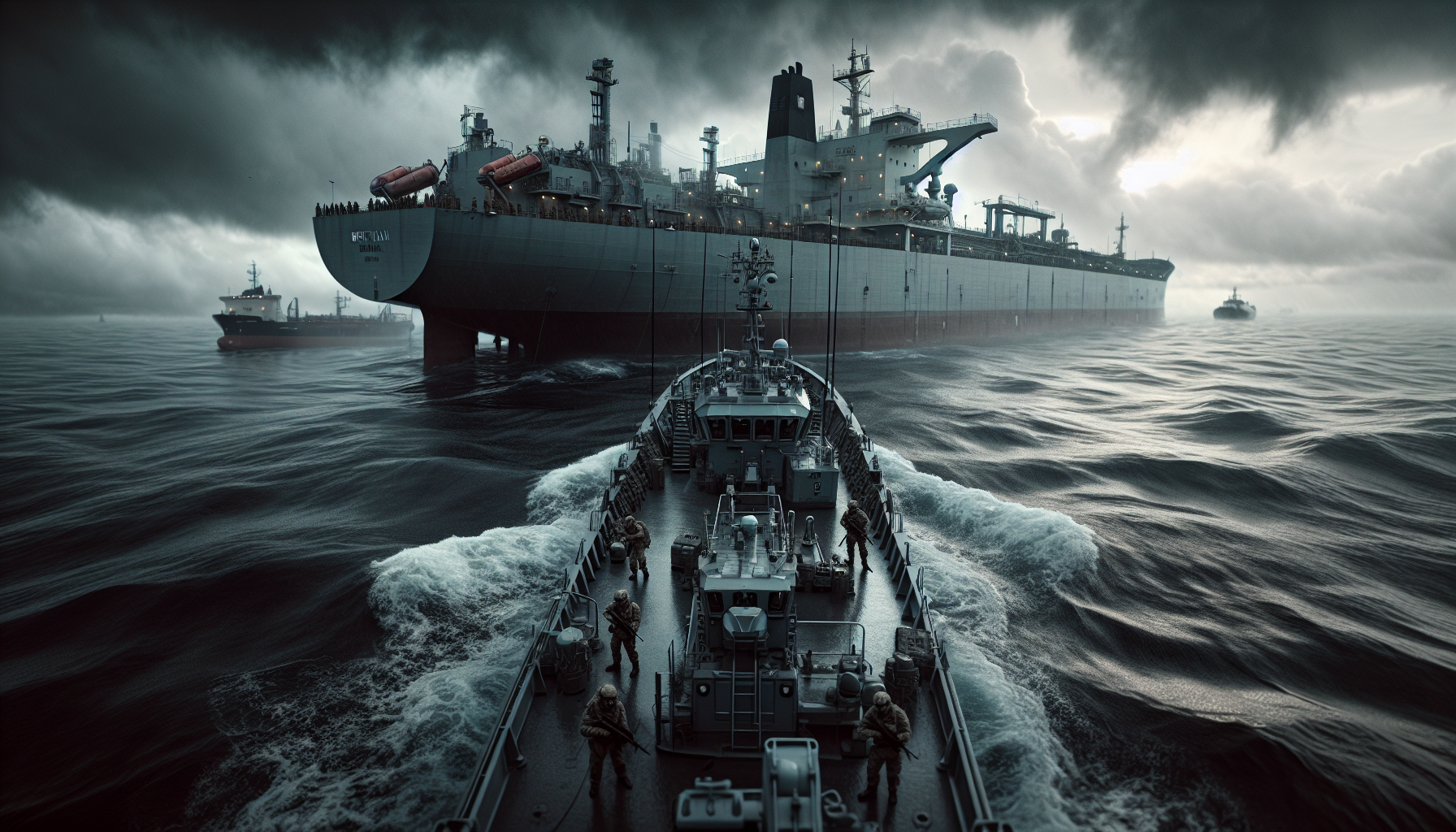
British Prime Minister Keir Starmer announced on Wednesday that he has authorized the military to board and detain Russian vessels believed to be part of a covert network facilitating Moscow’s oil exports in defiance of Western sanctions. This move aligns with increased efforts by European countries to disrupt Russia’s so-called shadow fleet, which plays a crucial role in financing Russia’s ongoing war in Ukraine.
Starmer justified the decision by highlighting that Russian President Vladimir Putin was likely benefiting from the surge in oil prices triggered by the conflict between the U.S. and Israel against Iran. “We are intensifying our actions against this shadow fleet, not only to protect Britain but also to deprive Putin’s war machine of the illicit profits fueling his brutal campaign in Ukraine,” Starmer stated.
Downing Street revealed that British military and law enforcement agencies have been preparing to board Russian ships that refuse to comply, are armed, or employ advanced surveillance technology to avoid capture. Following boarding, criminal charges may be pursued against the vessels’ owners, operators, and crew for violating sanctions laws.
Russia’s dependence on this shadow fleet has enabled it to continue exporting oil without adhering to Western restrictions imposed after its full-scale invasion of Ukraine in 2022. However, European attempts to maintain pressure on Russia faced setbacks earlier this month when the U.S. administration granted a 30-day waiver allowing countries to purchase sanctioned Russian oil products stranded at sea, aiming to stabilize global energy markets disrupted by the Iran conflict.
Starmer made this announcement ahead of his participation in the Joint Expeditionary Force Summit in Helsinki on Thursday, where the UK plans to advocate for enhanced coordination in seizing shadow fleet vessels. Britain has sanctioned 544 ships linked to this fleet, some of which occasionally transit the Channel separating Britain and France.
British estimates suggest that around 75% of Russia’s crude oil is transported via these shadow fleet tankers. These vessels often have opaque ownership structures and pose significant environmental risks due to their aging condition and poor regulation, raising concerns about potential spills, mechanical failures, and leaks that threaten marine ecosystems.
