



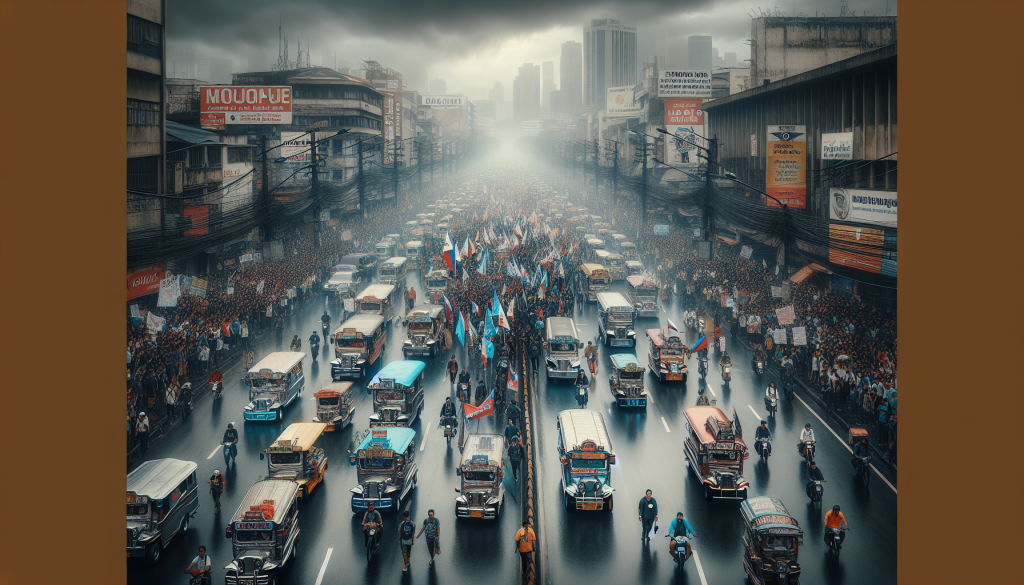
Transport workers in Manila have taken to the streets to voice their grievances regarding low wages and poor working conditions. The protests highlight the ongoing struggles faced by those in the transport sector, who argue that their compensation has not kept pace with the increasing cost of living. These demonstrations reflect broader labor unrest in the Philippines, where many workers are demanding fairer treatment and economic relief.
In a significant development, the protests have drawn attention to the critical role transport workers play in the urban economy, especially in a densely populated city like Manila. The sector is vital for daily commuting and goods movement, making the workers’ demands crucial for the city’s functioning. Meanwhile, the government and transport companies face pressure to address these issues to prevent further disruptions and social unrest.
Notably, the protests come amid a global context of rising inflation and economic challenges, which have exacerbated the hardships of low-income workers worldwide. The Manila demonstrations underscore the urgent need for policy reforms and labor protections in the Philippines. As the situation evolves, it could influence labor policies and inspire similar movements in other sectors across the country.

Leave an opinion