



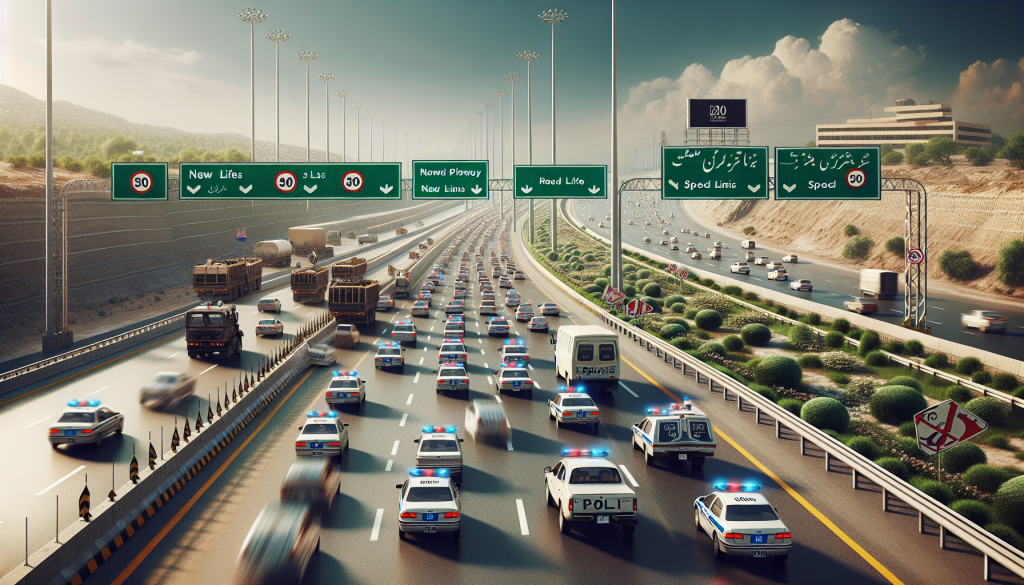
The National Highways and Motorway Police (NHMP) enforced reduced speed limits on motorways and national highways across Pakistan on March 26, 2026, as part of the federal government’s initiative to conserve fuel and improve energy efficiency. This decision follows directives from the prime minister aimed at promoting nationwide fuel savings and supporting austerity measures.
Under the new regulations, the maximum speed for cars and light transport vehicles (LTVs) on motorways has been lowered from 120 km/h to 100 km/h. Passenger service vehicles (PSVs) and heavy transport vehicles (HTVs), including buses and trucks, must now adhere to a reduced limit of 90 km/h, down from 110 km/h.
Similarly, on national highways, speed limits for cars and LTVs have been cut from 100 km/h to 80 km/h. For PSVs and HTVs, the limit has dropped from 80 km/h to 65 km/h. These adjustments aim to reduce fuel consumption, enhance road safety, and align with the government’s broader energy conservation strategy.
To ensure smooth implementation, the NHMP has launched a nationwide awareness campaign encouraging motorists to comply with the new speed restrictions. Officials have emphasized the importance of strict adherence to these limits for the success of the fuel-saving measures.
Automotive experts highlight that lowering driving speeds can significantly boost fuel efficiency. As vehicle speed increases, air resistance rises exponentially, forcing engines to consume more fuel. Driving at reduced speeds helps mitigate this effect, making fuel use more economical.
In a significant development, global oil supply disruptions caused by tensions in the Middle East have contributed to rising fuel prices worldwide. In response, countries including Pakistan are adopting austerity policies to limit fuel consumption. The International Energy Agency (IEA) has recommended reducing highway speed limits by 10 km/h, noting that this could decrease overall oil consumption from passenger vehicles by 1 to 6 percent, supporting global efforts to manage energy challenges.

Leave an opinion