



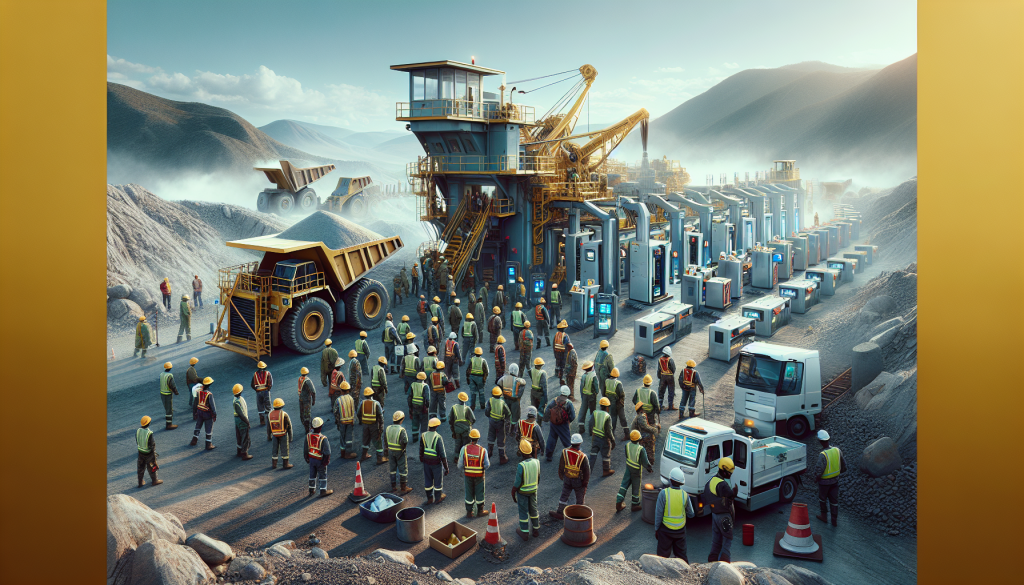
Zimbabwe has intensified its regulatory measures and crackdown on mineral smuggling following the ban on raw lithium exports imposed a month ago. This significant policy shift, announced on February 26, targets all raw mineral exports but primarily focuses on lithium, a vital mineral for which Zimbabwe is Africa’s leading producer. Most of its lithium shipments have been destined for China’s extensive rechargeable battery industry.
While the ban has been praised locally as a necessary move to halt the depletion of the nation’s natural resources, critics have raised doubts about its practicality, and workers have expressed fears regarding their employment stability. Initially, Zimbabwe had planned to prohibit raw mineral exports starting January 2027 to encourage local processing and industrial development, a strategy also adopted by other African nations such as Malawi in October. However, the government accelerated this timeline by 10 months after observing mining companies rushing to maximize production and exports before the ban took effect, Mining Minister Polite Kambamura revealed earlier this month.
“Following the announcement of the intended ban, the mining sector increased production and export volumes, with a surge in applications for lithium export permits as producers aimed to ship as much product as possible before the deadline,” Kambamura explained. Zimbabwe’s complex geology, rich in multiple valuable minerals, allows for secondary minerals like tantalum, beryl, and tin to be concealed within shipments. Without local testing or export controls, these minerals have been leaving the country undetected and untaxed.
Kambamura emphasized that without domestic processing capabilities, the government cannot effectively tax the full extent of its mineral wealth. In response, Chinese investors are investing millions to establish lithium processing plants within Zimbabwe, adding value before export. The first of these facilities is expected to commence operations in the coming weeks.
Authorities plan to introduce scanning technology at border crossings soon to detect undeclared rare earth minerals. Additionally, the government is developing a critical mineral policy and preparing a new survey to map and quantify the country’s rare earth mineral reserves. Officials have cited significant financial losses as a key reason for the sudden ban but have yet to disclose the full scale of these leakages, with estimates still being finalized.
Despite these efforts, concerns remain regarding the ban’s enforceability, as it was not enacted through formal legislation. Farai Maguwu, director of the mining watchdog Centre for Natural Resource Governance, criticized the move as insufficient, stating that the mining sector requires robust legal frameworks rather than press announcements. He called for laws imposing mandatory minimum sentences for offenders. Several warning signs had already emerged, including reports from mine workers that lithium concentrate trucks were overloaded by up to 15 tonnes beyond their legal limits. Storage facilities in neighboring Mozambique, which has Indian Ocean ports, reportedly hold large quantities of Zimbabwean minerals.
Labour representatives have voiced worries about the impact on miners, who face job insecurity due to the abrupt policy change. Justice Chinhema, secretary of the Zimbabwe Diamond and Allied Minerals Workers Union, highlighted fears of restructuring, reduced working hours, and potential layoffs. Workers are reportedly suffering both from unsafe production pressures and the threat of income loss. At Prospect Lithium Zimbabwe, employees noted management’s decision to eliminate overtime, reverting to standard eight-hour shifts from previous 11- to 12-hour shifts. Many workers, reliant on overtime pay and short-term contracts, are experiencing heightened anxiety.
At Bikita Minerals, Zimbabwe’s largest lithium mine, some workers are already on forced leave, and wages tied to production targets are expected to decline, an anonymous employee. Human rights advocate Rashweat Mukundu acknowledged Zimbabwe’s opportunity to capitalize on the global green energy surge but questioned the country’s capacity to advance beyond raw mineral exports to battery manufacturing. He raised concerns about the availability of expertise and infrastructure necessary for value addition and warned that the policy might deter future mining investments, potentially undermining Zimbabwe’s competitiveness in the sector.

Leave an opinion