



The recent U.S. and Israeli military actions against Iran have triggered a crisis in the Middle East, severely impacting global shipping routes and creating significant challenges for used-car exporters in Japan and South Korea.
Umar Ali Hyder Ali, who has lived in Japan for 20 years and runs Kobe Motor in Yokohama, ships thousands of used vehicles annually to South Asia, the Middle East, and Africa. These cars are prized for their durability and excellent condition, thanks to Japan’s strict maintenance regulations. However, following the outbreak of conflict, one of his shipments carrying over 500 cars was stranded at sea. The vessel was unable to dock in Sri Lanka because the port was overwhelmed with cargo rerouted from Dubai. After more than ten days of delay, the cars were finally offloaded at Hambantota port last week.
This disruption highlights how the near-closure of the Strait of Hormuz, a critical maritime chokepoint between Iran and Oman, is throwing the used-car trade into disarray. Many small businesses in Japan and South Korea, which form a substantial part of this global industry, are facing mounting difficulties.
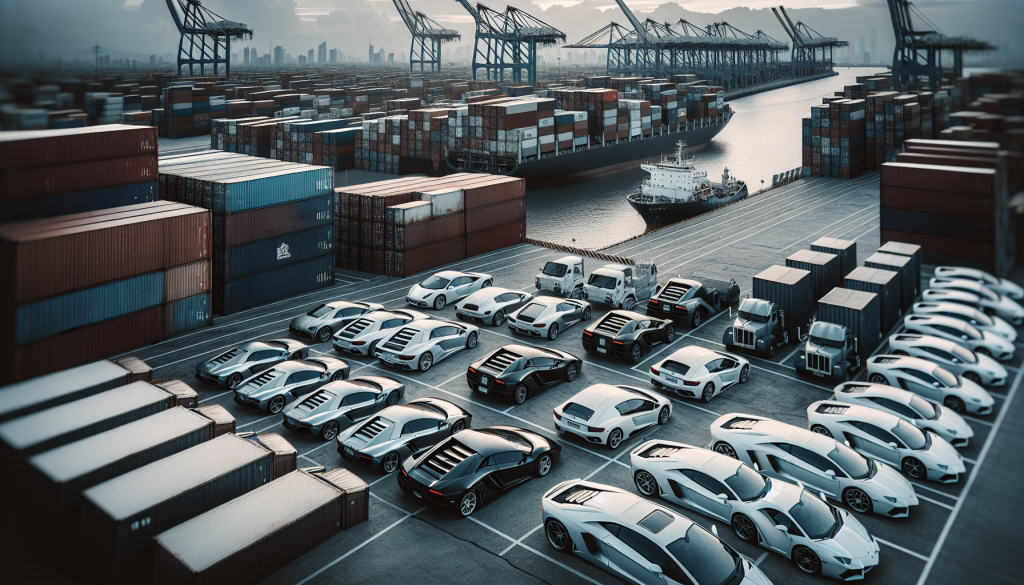
Port congestion has caused panic among Japanese shipping firms, leading some to cancel shipments altogether. Others have suggested rerouting cargo through ports in Pakistan or China, with one company demanding a $5,000 deposit per car. Some vehicles may even be returned to Japan. Hyder Ali’s company typically ships around 18,000 cars yearly, mainly compact Toyotas and Hondas favored in Sri Lanka. Currently, about 50 luxury cars—including Rolls-Royces, Lamborghinis, and Ferraris—are stuck in Sri Lanka and China, unable to reach Dubai where Middle Eastern buyers await. While air freight remains an option, its high cost limits it to only the wealthiest customers.
Last year, Japan and South Korea exported a combined $19 billion worth of used cars, with Japan accounting for just over half. More than a third of South Korea’s 883,000 used-car exports were destined for the Middle East. The UAE alone received 224,000 used cars from Japan, making it the largest single market.
In South Korea, the conflict has brought shipments to a halt during the peak season for used-car sales, which typically runs from March through September. At the port of Incheon, where about 80% of vehicles are usually shipped to the Middle East, activity has slowed dramatically. Many cars remain stuck in storage, while ships at sea are pausing or diverting their routes to avoid the Strait of Hormuz.
Shipping lines are making decisions to unload cargo at alternative Middle Eastern ports or even further afield, leaving dealers scrambling to adapt. Jin Jae-woong, president of Automobile International, described the situation as a forced “wait-and-hold” mode. Popular models like Hyundai’s Avante MD and Kia’s K3 are caught in limbo, with his company incurring storage costs of around 40 million won monthly. Despite the current downturn, Jin plans to purchase cars in advance, anticipating a rebound in demand once the conflict subsides.
Some exporters are exploring other markets, but options remain limited. Yun Seung-hyun, president of Ventus Auto, noted that regions like Africa and Latin America lack sufficient demand to absorb redirected shipments. Containers destined for Dubai’s Jebel Ali port remain delayed, with vessels stuck near Mumbai. Rising oil prices have further increased freight costs, compounding the challenges. With over half of Ventus Auto’s 6.6 billion won annual revenue tied to the UAE market, the uncertainty over cargo destinations poses a significant threat. Yun summed up the situation bluntly: “There’s effectively no solution right now.”

Leave an opinion