

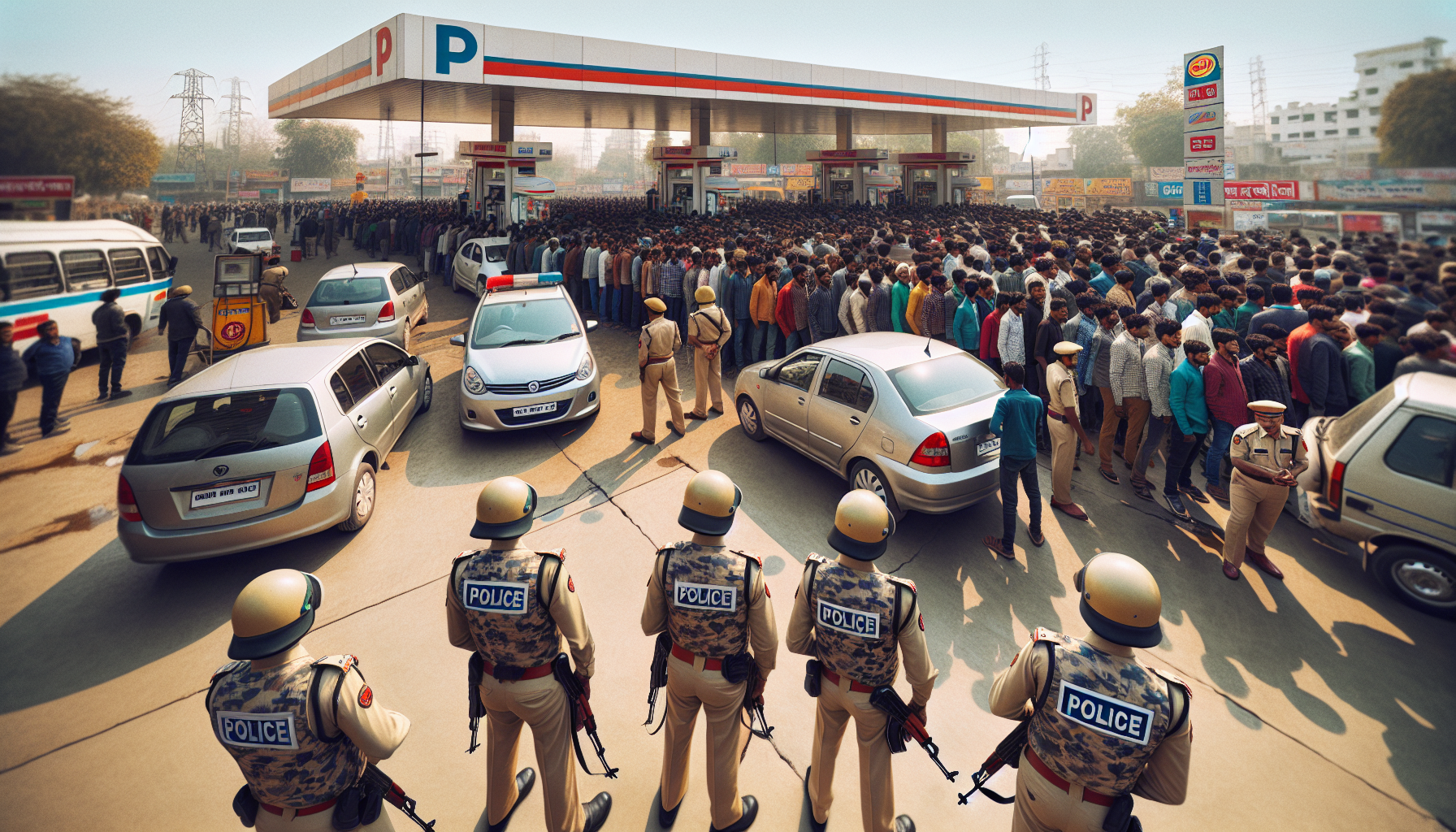
In a significant development, police forces have been deployed at petrol stations across Gujarat, India, as public anxiety mounts over potential fuel shortages. This precautionary measure comes amid growing concerns about disruptions in the supply chain of critical energy resources, including petrol, diesel, LPG, LNG, and crude oil.
India relies heavily on crude oil imports, with over 40% of its shipments passing through the Strait of Hormuz. This vital maritime route has recently been blocked by Iran in response to the ongoing conflict between the United States and Israel. The blockade has severely impacted the transportation of essential fuel supplies, triggering fears of inflationary pressures and hampering economic growth prospects.
Long queues at petrol stations have been reported not only in Gujarat but also in other major states such as Maharashtra, Tamil Nadu, and Telangana. Despite these visible signs of public concern, officials have reassured the population that sufficient stocks of petrol and diesel remain available to meet current demand. Nonetheless, the situation underscores India’s vulnerability due to its dependence on energy imports through the geopolitically sensitive Strait of Hormuz.
As the crisis unfolds, authorities continue to monitor the situation closely while implementing measures to maintain order and ensure equitable fuel distribution. The blockade’s broader implications for India’s energy security and economic stability remain a critical issue as the conflict in the Middle East persists.
