

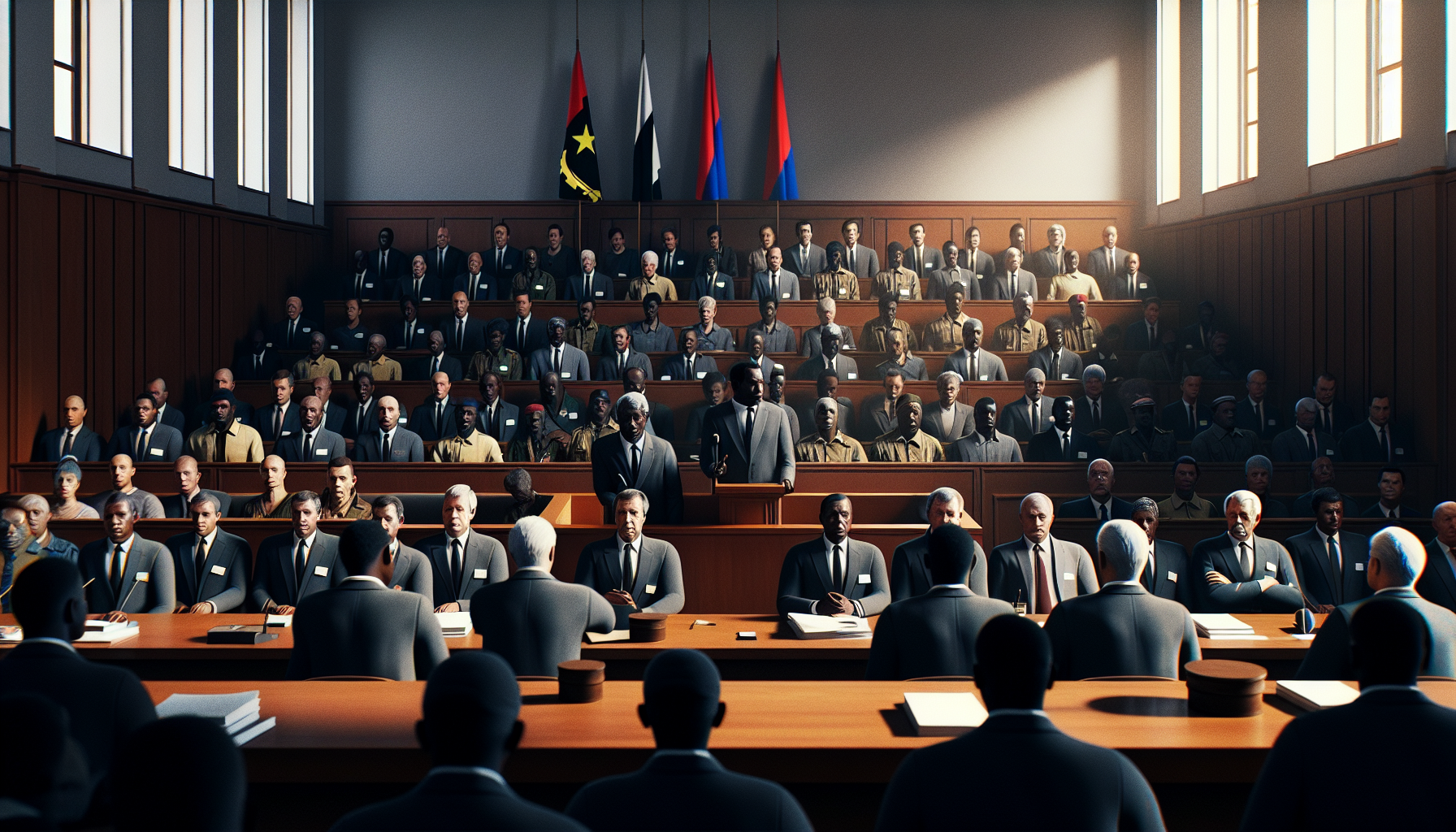
In a significant development that has captured international attention, a group comprising both Russian nationals and Angolan citizens has been brought to trial in Angola. They stand accused of orchestrating and inciting anti-government protests, a charge that has sparked widespread debate and controversy within the country and beyond. The accused, however, have firmly denied all allegations, maintaining their innocence throughout the proceedings.
The backdrop to this trial is a series of demonstrations that shook parts of Angola, raising questions about foreign interference and the stability of the nation’s political landscape. Authorities allege that this group was involved in a calculated operation aimed at destabilizing the government by provoking unrest among the population. These claims have intensified scrutiny on the nature of international involvement in domestic affairs, particularly concerning Russia’s role in African geopolitics.
Meanwhile, the accused parties have argued that their actions were misinterpreted and that they were exercising their legitimate rights to free expression and assembly. They contend that the protests were spontaneous and rooted in genuine grievances rather than being orchestrated by any external entity. This defense has resonated with some segments of the public who view the trial as politically motivated.
It is worth noting that Angola has experienced a complex political environment in recent years, with tensions between the government and opposition groups occasionally flaring into public demonstrations. The current trial adds another layer to this dynamic, highlighting concerns over sovereignty and the influence of foreign powers in shaping internal political narratives.
In a related development, international observers and human rights organizations have called for transparency and fairness in the judicial process, emphasizing the importance of upholding legal standards and protecting civil liberties. The outcome of this trial could have far-reaching implications not only for Angola’s domestic politics but also for its diplomatic relations, particularly with Russia.
