

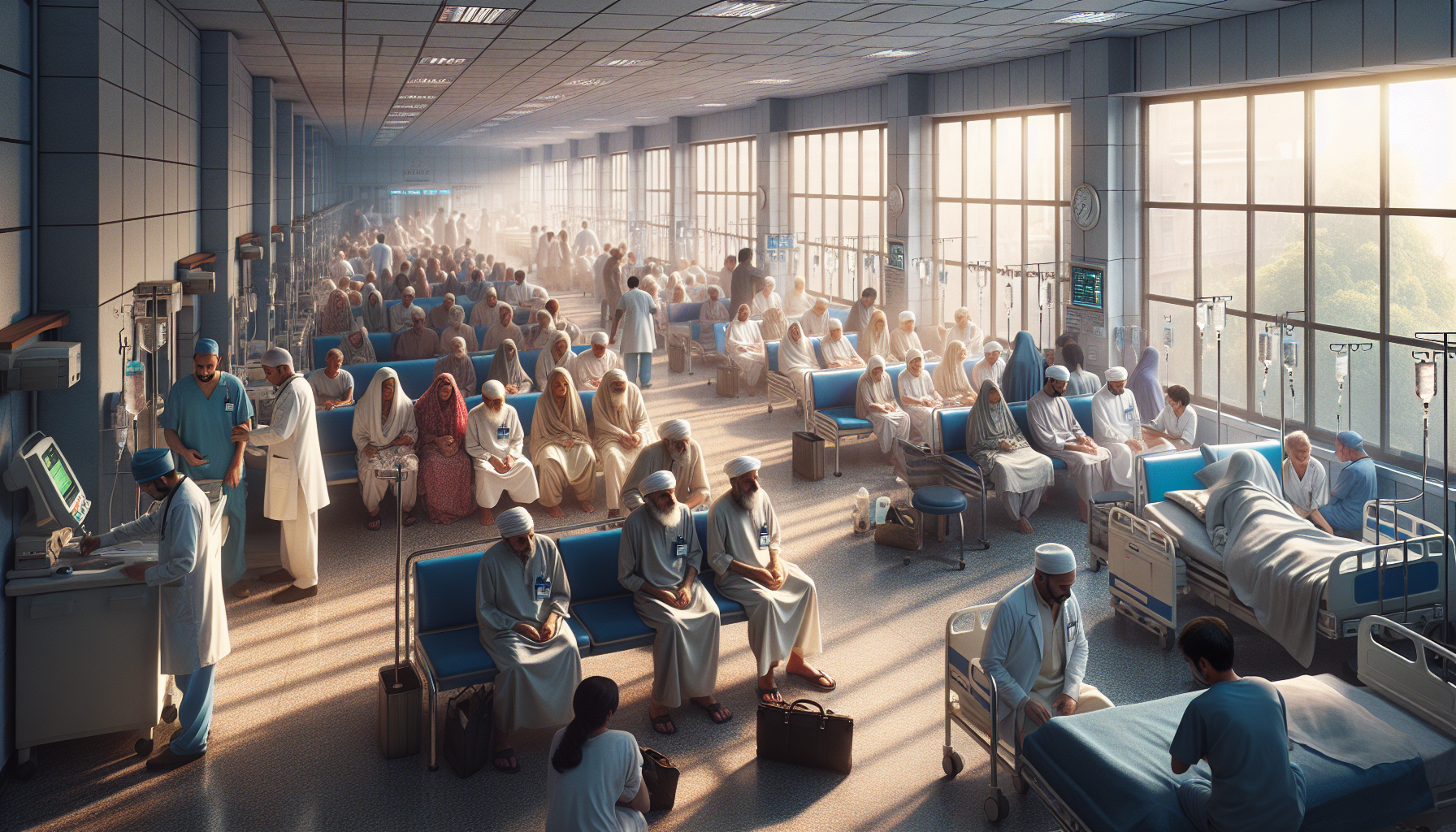
Cancer patients throughout Sindh, including the bustling metropolis of Karachi, are confronting significant hardships as no single public sector hospital in the province offers comprehensive cancer treatment services under one roof. This glaring gap in healthcare infrastructure forces patients to navigate a complex and disjointed system, often requiring them to visit multiple hospitals for surgery, chemotherapy, and radiotherapy. The situation becomes even more dire for those in advanced stages of cancer, as proper palliative care to alleviate their suffering remains largely unavailable in public facilities.
Health experts and oncologists have long highlighted the fragmented nature of cancer care in Sindh, where patients are routinely shuffled between various institutions. This not only delays the initiation and continuity of treatment but also amplifies the financial strain and emotional distress on families already grappling with the devastating diagnosis. Pakistan reports over 180,000 new cancer cases annually, with Sindh accounting for a substantial share due to its dense population and relatively better diagnostic capabilities compared to other provinces.
Despite Karachi’s status as Pakistan’s largest city and a major healthcare hub, the absence of an integrated cancer treatment center remains a critical shortfall. No government hospital in the province currently provides a full spectrum of cancer care services, including surgery, chemotherapy, radiotherapy, and palliative care. Consequently, patients often start their treatment journey at one hospital but must be referred elsewhere for other necessary therapies, leading to fragmented care and increased hardship.
A poignant example illustrating this systemic failure involves a 55-year-old man from Hyderabad diagnosed with stomach cancer. After his initial diagnosis, he was referred to the Sindh Institute of Urology and Transplantation (SIUT) in Karachi. However, his journey quickly became a frustrating cycle of referrals—from SIUT’s Reagent Plaza facility to its main hospital near Civil Hospital Karachi, then to Jinnah Postgraduate Medical Centre (JPMC), and finally to the Karachi Institute of Radiotherapy and Nuclear Medicine (Kiran). At each step, he was told to seek treatment elsewhere, with the final diagnosis revealing that his cancer had metastasized to stage four, rendering curative treatment impossible.
In a heartbreaking turn, oncologists at JPMC advised the patient’s family to pursue palliative care at Aga Khan University Hospital, as no public sector hospital in Sindh offers dedicated end-of-life care for terminal cancer patients. After exhausting all options and enduring days of hospital visits, the patient returned to Hyderabad, where he now awaits death at home, suffering from unrelieved pain. This tragic case underscores the urgent need for comprehensive cancer care facilities that can provide symptom relief alongside treatment.
The lack of palliative care services in public hospitals means many patients with advanced or metastatic cancer endure their final days in severe discomfort without adequate pain management. Another pressing issue is the scarcity of potent pain medications. Morphine, both oral and injectable forms, which is considered the gold standard for managing severe cancer pain, is rarely available in public healthcare settings. Similarly, fentanyl patches, essential for chronic cancer pain relief, are difficult to procure due to stringent regulatory controls and supply shortages. Many hospitals either do not stock these critical medicines or face bureaucratic hurdles in acquiring them, leaving patients to suffer unnecessarily.
Officials within the Sindh health department acknowledge that cancer treatment services are currently dispersed across multiple institutions in Karachi. For instance, JPMC offers cancer surgeries and chemotherapy, often facilitated through financial aid programs like Pakistan Bait-ul-Mal to assist patients unable to afford costly medicines. The hospital also houses one of the country’s major radiotherapy units but lacks a structured palliative care program. Despite the increasing cancer burden, Sindh has yet to establish a centralized public sector cancer hospital that integrates diagnosis, surgery, chemotherapy, radiotherapy, and palliative care under a single roof.
It is worth noting that the provincial government has invested hundreds of millions of rupees in supporting specialized treatments such as bone marrow transplants at institutions like Dow University of Health Sciences and the National Institute of Blood Diseases in Karachi. However, these efforts have not translated into a holistic cancer care model accessible to the broader population. Repeated attempts to obtain comments from Sindh Health Minister Dr. Azra Pechuho were unsuccessful, though she has previously asserted that Sindh boasts some of the country’s best healthcare facilities and that the province’s health sector achievements often go unrecognized.
Meanwhile, patients and their families continue to bear the brunt of this fragmented healthcare system. Many are compelled to sell personal assets, take on debt, or rely on charitable organizations to finance their ongoing treatment. Health professionals warn that without the establishment of integrated cancer treatment centers and the introduction of comprehensive palliative care services in public hospitals, thousands of cancer patients in Sindh will continue to face not only difficulties in accessing treatment but also unbearable pain during the advanced stages of their illness.
