

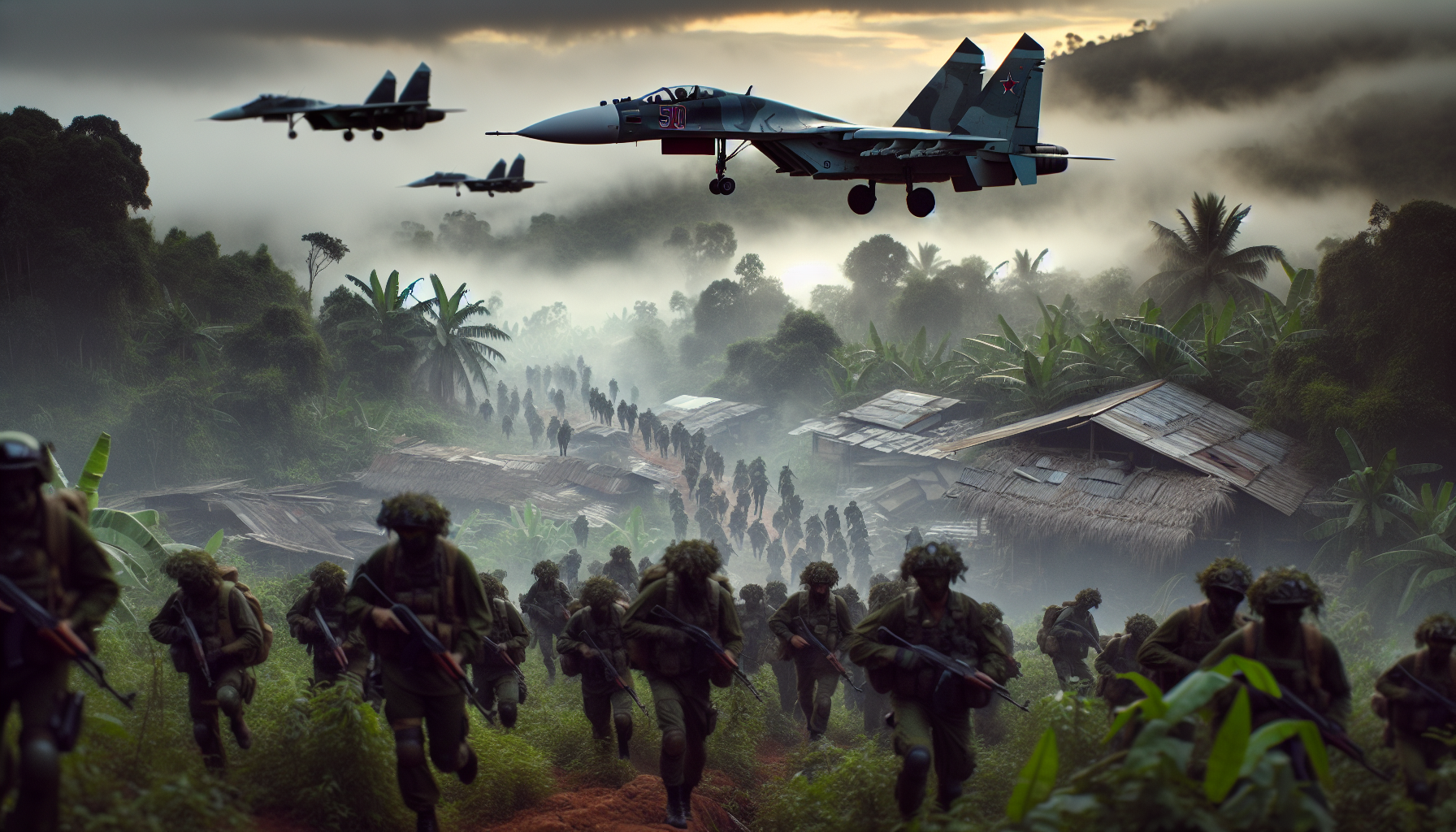
The ongoing civil war in Myanmar is increasingly reflecting the influence of Russian military hardware and combat techniques, reminiscent of those deployed in Ukraine. From the skies to the ground, the presence of Russian aircraft and the adoption of aggressive infantry tactics have become a defining feature of the conflict, signaling a troubling escalation in violence and strategy.
It is worth noting that the Myanmar military, known as the Tatmadaw, has reportedly integrated Russian-made fighter jets and helicopters into their arsenal. These aircraft have been used to conduct airstrikes against opposition forces and civilian areas alike, intensifying the humanitarian crisis in the region. The use of such advanced weaponry marks a significant shift in the conflict’s dynamics, enabling the military to exert greater control over contested territories.
Meanwhile, on the ground, the Tatmadaw has adopted a brutal approach to warfare that mirrors the so-called ‘meat grinder’ tactics seen in Ukraine. This involves deploying large waves of conscripted soldiers in frontal assaults, often with little regard for casualties. These human wave attacks, designed to overwhelm enemy positions through sheer numbers, have become a grim hallmark of the fighting, leading to devastating losses among Myanmar’s youth.
In a related development, the influx of Russian military advisors and trainers is believed to have played a role in shaping these tactics. Their expertise in conventional and hybrid warfare has reportedly influenced the Tatmadaw’s operational planning, further aligning Myanmar’s conflict with the patterns observed in Eastern Europe. This connection underscores the broader geopolitical implications, as Russia’s military footprint extends beyond its immediate borders.
The adoption of Russian weapons and combat methods has drawn international concern, highlighting the complex web of foreign involvement in Myanmar’s internal strife. As the civil war drags on, the consequences of this military collaboration are becoming increasingly evident, with civilian populations bearing the brunt of intensified air raids and ground offensives. The situation remains volatile, with little indication of a near-term resolution.
