

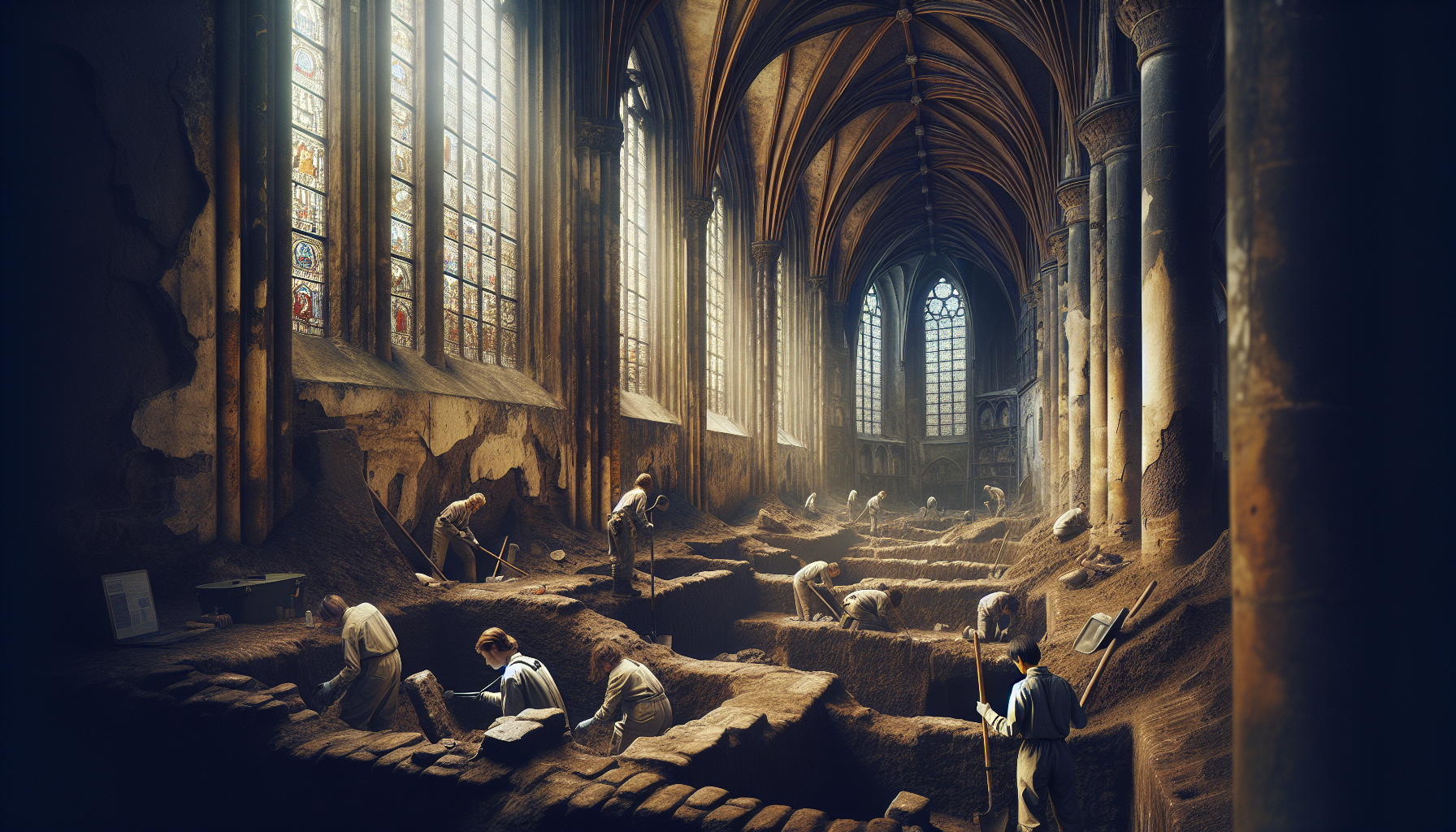
Archaeologists have potentially uncovered the remains of Charles de Batz-Castelmore d’Artagnan, the legendary musketeer famously depicted in Alexandre Dumas’ novels. D’Artagnan was historically killed during the Siege of Maastricht in 1673, a significant military engagement in the Franco-Dutch War. The discovery was made beneath a church in the Netherlands, where the siege took place, offering a rare physical link to this iconic figure of 17th-century European history.
In a significant development, this finding sheds light on the final resting place of a man whose life inspired one of literature’s most enduring heroes. D’Artagnan’s role in the siege was pivotal, and his death marked a notable moment in the conflict between France and the Dutch Republic. The potential identification of his remains could provide valuable insights into the historical events surrounding the siege and the musketeer’s life beyond the fictionalized accounts.
Meanwhile, this archaeological breakthrough has sparked interest among historians and literary enthusiasts alike, bridging the gap between myth and reality. The discovery not only enriches the cultural heritage of the Netherlands but also deepens the understanding of 17th-century military history. If confirmed, the remains will offer a tangible connection to d’Artagnan, whose legacy continues to captivate audiences worldwide through Dumas’ celebrated works.
