

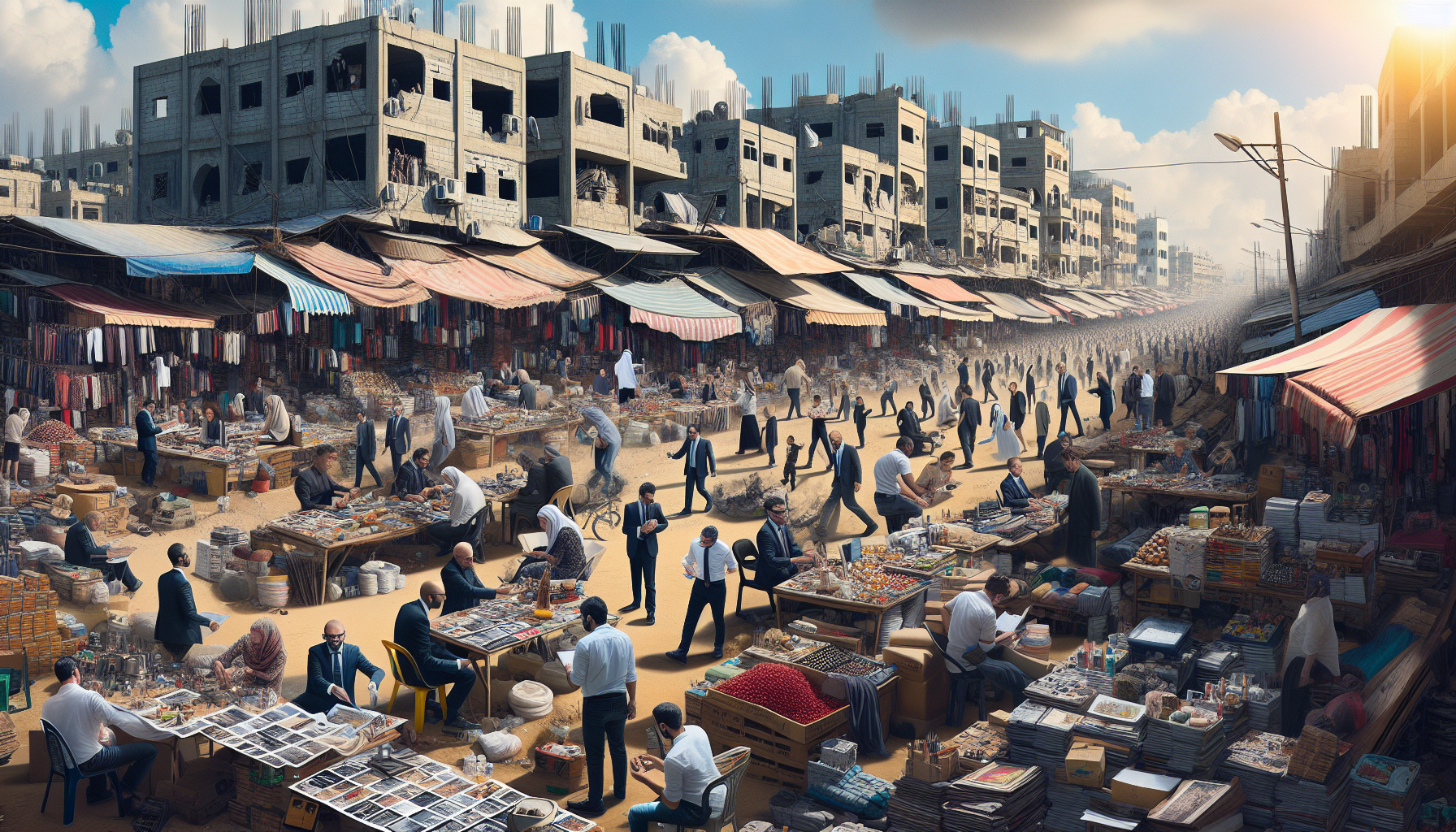
In the besieged Gaza Strip, the relentless cycle of conflict has not only devastated infrastructure but also profoundly altered the economic landscape, forcing many professionals to reconsider their career paths. Once thriving in fields such as arts, business, and specialized trades, countless individuals now find themselves compelled to take on any form of employment available simply to make ends meet.
The war has severely restricted opportunities, with many businesses shuttered and industries crippled. This economic upheaval has led to a significant shift in the job market, where survival often takes precedence over passion or expertise. Artists, entrepreneurs, and skilled workers who once contributed to Gaza’s cultural and economic vibrancy are now adapting to new realities, frequently accepting jobs far removed from their original professions.
It is worth noting that this transformation is not just a matter of personal choice but a stark necessity driven by the scarcity of resources and the blockade that limits imports, exports, and movement. As a result, many professionals have turned to informal sectors or manual labor, which, while less fulfilling, provide a crucial lifeline for their families. This shift underscores the resilience of Gaza’s population amid adversity but also highlights the long-term challenges facing the region’s workforce.
Meanwhile, humanitarian organizations have expressed concern about the erosion of skilled labor and the potential loss of a generation’s professional development. The lack of stable employment opportunities threatens not only individual livelihoods but also the broader economic recovery and future growth prospects of Gaza.
In a related development, some professionals have sought remote work or online opportunities, leveraging technology where possible, though internet access and infrastructure remain unreliable. This digital pivot, while promising, is accessible only to a limited segment of the population, leaving many others without viable alternatives.
Ultimately, the story of Gaza’s evolving job market is one of adaptation and endurance. Despite the hardships, the people continue to find ways to survive, even if it means stepping away from their dreams and expertise. Their experience serves as a poignant reminder of the human cost of conflict and the urgent need for sustainable solutions to rebuild Gaza’s economy and restore hope for future generations.
