

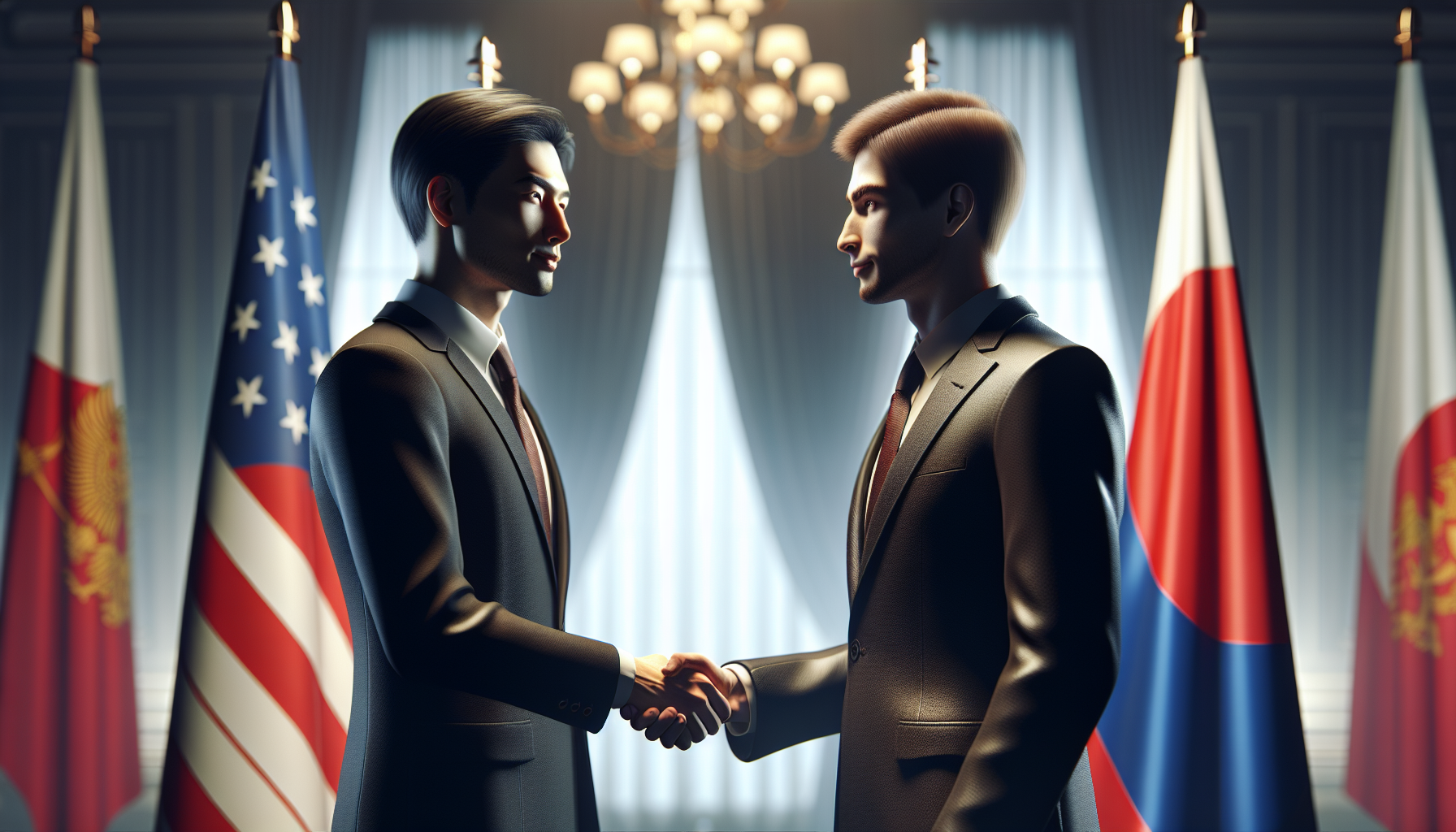
Belarusian President Alexander Lukashenko commenced his inaugural official visit to North Korea on Wednesday, marking a significant moment in the diplomatic relations between the two nations. This two-day trip underscores the growing alliance between Minsk and Pyongyang, both of which face extensive Western sanctions and share close ties with Russia. The visit is expected to deepen cooperation and explore new avenues for mutual benefit, especially in political and economic spheres.
The Belarusian state news agency, Belta, highlighted that the primary objective of this visit is to identify key areas of collaboration and promising projects that could be implemented to strengthen bilateral relations. This development comes against the backdrop of both countries playing notable roles in supporting Moscow’s military efforts in Ukraine. North Korea has reportedly deployed ground troops and supplied weapons to Russia, while Belarus has served as a strategic launchpad for Russia’s invasion since early 2022.
It is worth noting that this diplomatic engagement follows a previous encounter between the two leaders. Kim Jong Un and Alexander Lukashenko met in September last year in Beijing during a military parade held at Tiananmen Square. It was during this meeting that Kim extended a formal invitation to Lukashenko, signaling Pyongyang’s desire to elevate their relationship. Experts believe that this visit is also a symbolic gesture aimed at showcasing solidarity among nations that oppose the Western-led international order.
Lee Ho-ryung, a senior analyst at the Korea Institute for Defense Analyses, emphasized that Kim Jong Un intends to leverage this occasion to boost North Korea’s diplomatic standing and reinforce unity within the so-called anti-Western bloc. In a letter sent to Lukashenko earlier this month, Kim expressed his willingness to expand and develop the traditional friendship and cooperation between the two countries to a new and higher level, reflecting the demands of the contemporary global landscape. Responding in kind, Lukashenko reaffirmed Belarus’s interest in actively broadening political and economic ties with North Korea across all levels.
Meanwhile, North Korea continues to face a barrage of sanctions from Western countries, primarily due to its ongoing nuclear weapons program and missile tests. Additionally, Pyongyang’s support for Russia’s military campaign in Ukraine has further isolated it internationally. Intelligence from South Korea and Western agencies estimates that thousands of North Korean soldiers have been sent to fight alongside Russian forces, mainly in the Kursk region. Along with personnel, North Korea has supplied artillery shells, missiles, and rocket systems to Moscow. Tragically, it is believed that around 2,000 North Korean soldiers have lost their lives in the conflict, with many more wounded.
In return for its military support, North Korea reportedly receives financial aid, military technology, food, and energy supplies from Russia. This growing partnership has allowed Pyongyang to reduce its reliance on China, its long-standing ally. Notably, Russian President Vladimir Putin made a visit to North Korea earlier in 2024, further cementing this trilateral relationship.
On the human rights front, international organizations continue to condemn North Korea for widespread abuses, including torture, public executions, operation of prison camps, forced labor, and severe restrictions on freedom of expression and movement. These issues remain a significant point of contention between Pyongyang and the global community.
Turning to Belarus, President Lukashenko has increasingly aligned his country with Russia over the past three decades, tightening his grip on power and suppressing dissent. Following the controversial 2020 presidential election, which many opposition groups and international observers deemed fraudulent, Minsk cracked down on protests and political opponents. This has led to heavy sanctions from Western nations, targeting Belarus for its role in facilitating Russia’s invasion of Ukraine and its domestic human rights violations.
Interestingly, in a related development, former US President Donald Trump has shown interest in improving relations with Belarus during a potential second term. His administration had previously eased some sanctions and even welcomed Belarus into what he called his “Board of Peace.” In recent months, Belarus has released dozens of prisoners, largely due to diplomatic efforts from the United States, including the release of 250 detainees earlier this month. However, hundreds of political prisoners remain incarcerated, many arrested in the aftermath of the disputed 2020 election.
It is also worth mentioning that Trump met with Kim Jong Un during his first term, sparking speculation about a possible repeat meeting when the former president visits China next month. Such developments could have significant implications for the geopolitical dynamics involving these nations.
